Preserving Context in Financial Decision-Making
Role
Product Designer
Industry
B2B Fintech
Timeframe
Oct - Nov 2025 (6 weeks)
Team
3 Product Designers
1 Business Analyst
1 Technical Architect
Skills
Product Design
Product Management
User Research
The Problem
Finance teams already have all the data, but not the continuity.
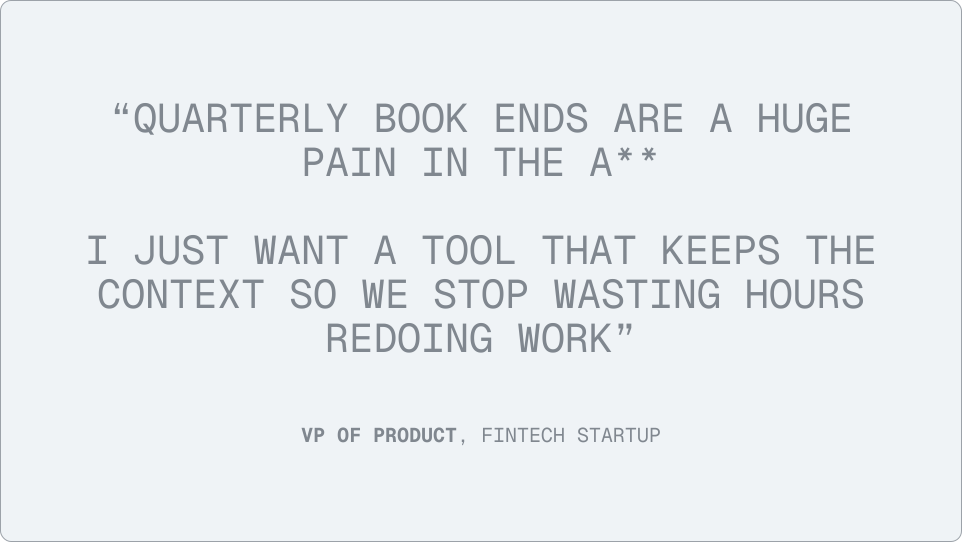
When analysts leave, so does the context in their heads. Even with hundreds of documents, teams lack the connective layer that explains why a number changed or how a decision was made.
This leads to rework, delays, and repetitive “Can you remind me what happened last quarter?” cycles.
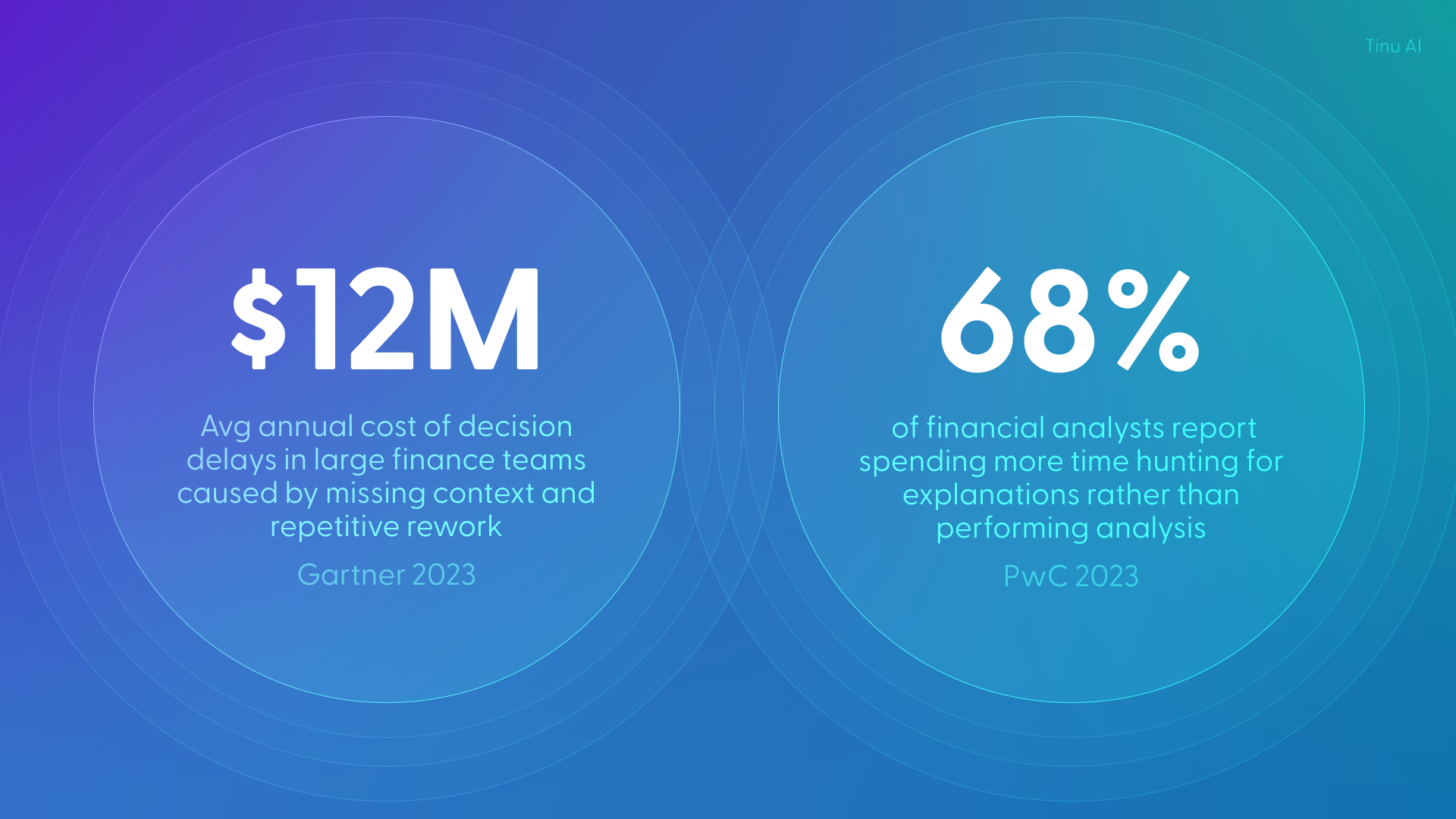
And the data backs her up — Research shows that missing context and repeated rework impose a significant cost on large finance teams.
To better understand the problem space and its impact on our primary audience, we interviewed professionals whose roles include financial planning and analysis responsibilities, as well as leaders who oversee financial planning and decision-making.
THE OPPORTUNITY
Why does critical context fail to turn into action?
The real problem isn't just that context lives in people's heads. It's that context decays at three specific points:
1.
Capture Failure
Context never gets written down or gets written down too late.
2.
Structure Failure
Even when context is written, it's unstructured, unorganized, or difficult to reuse.
3.
Retrieval Failure
Even documented context can't be found at moment decisions need to be made.
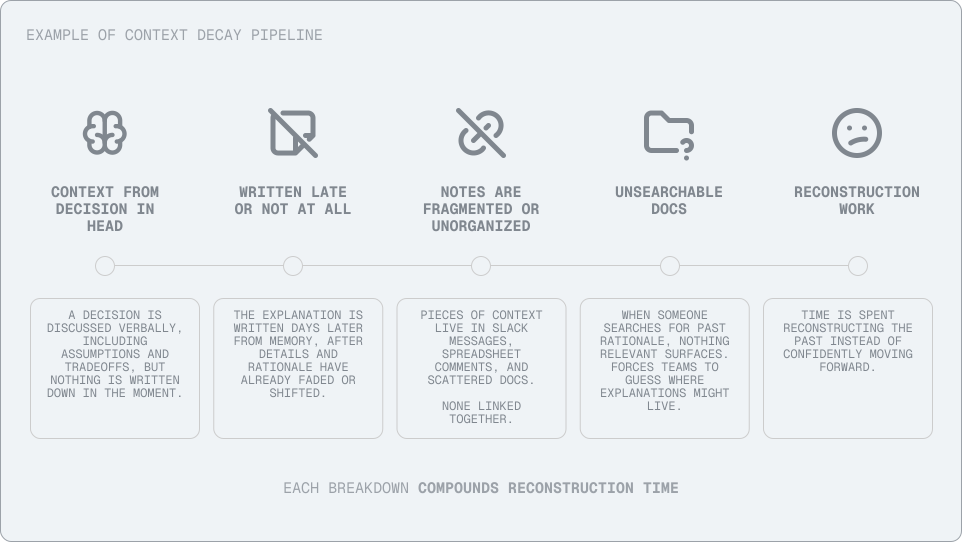
The opportunity comes when we can create a system that preserves context across these points of failure.
The Solution
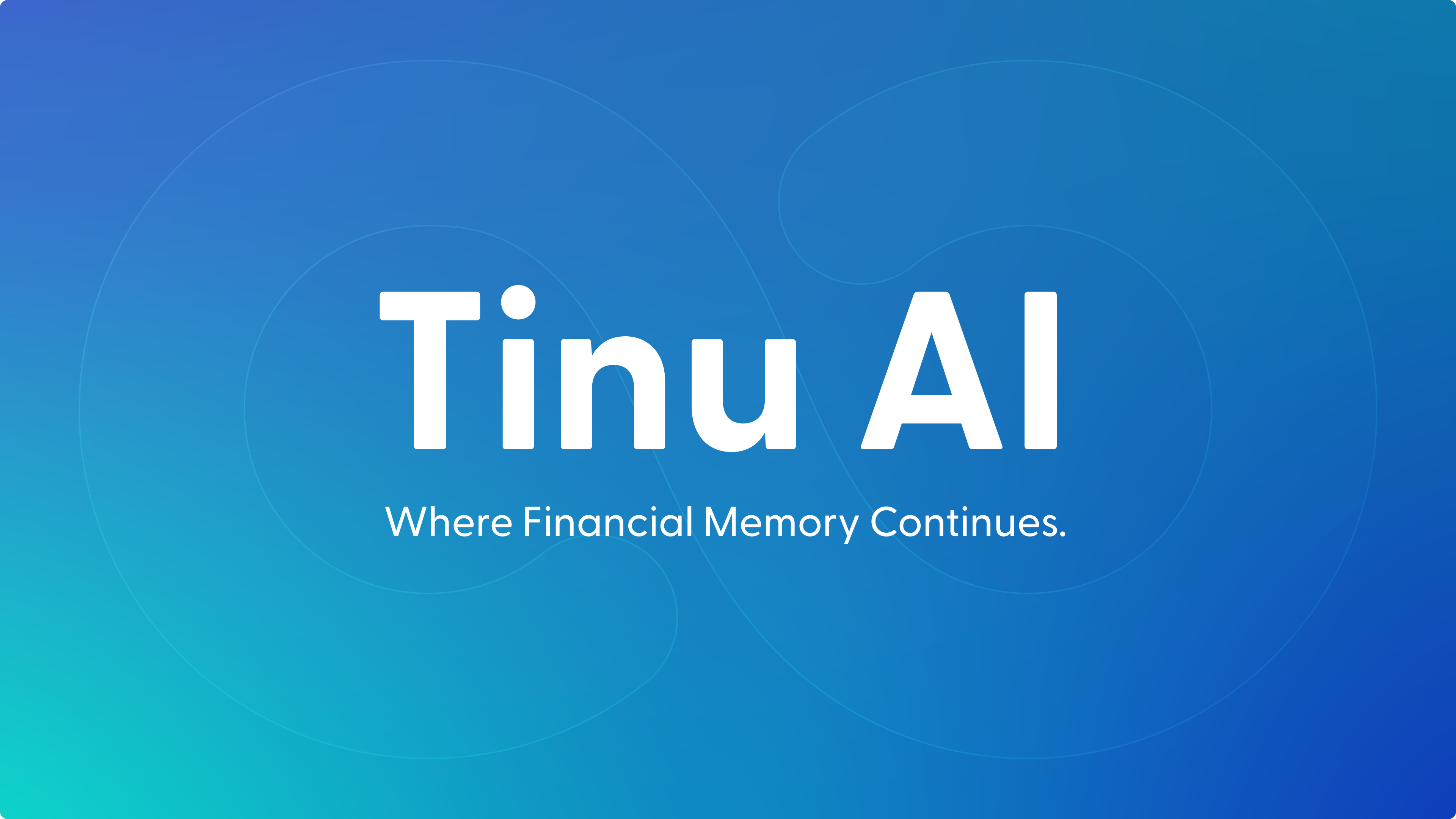
Tinu AI: Financial Memory That Continues
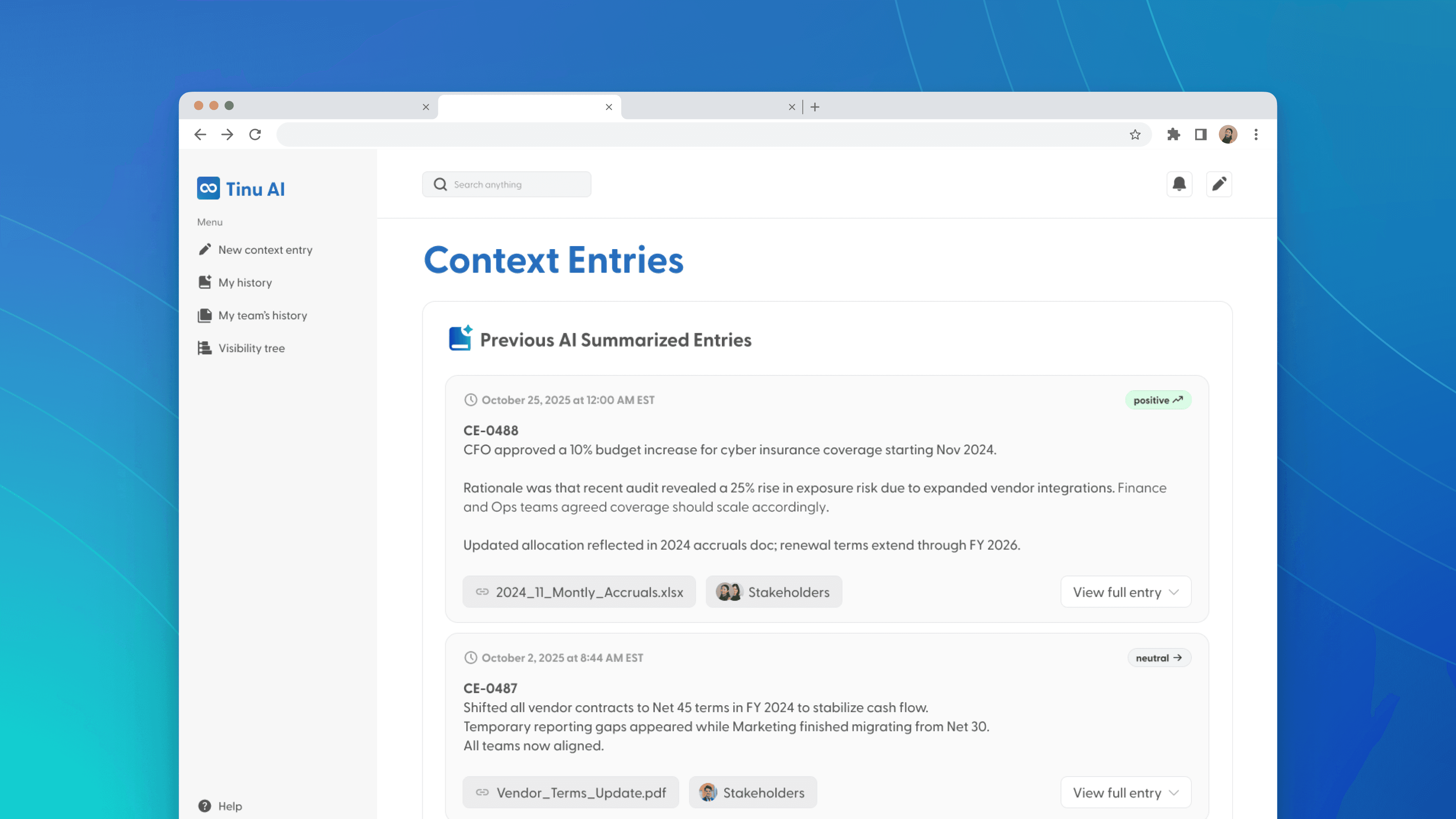
Tinu AI functions as a shared memory layer for finance teams, ensuring decision context survives capture, structure, and retrieval and remains usable in day-to-day workflows.
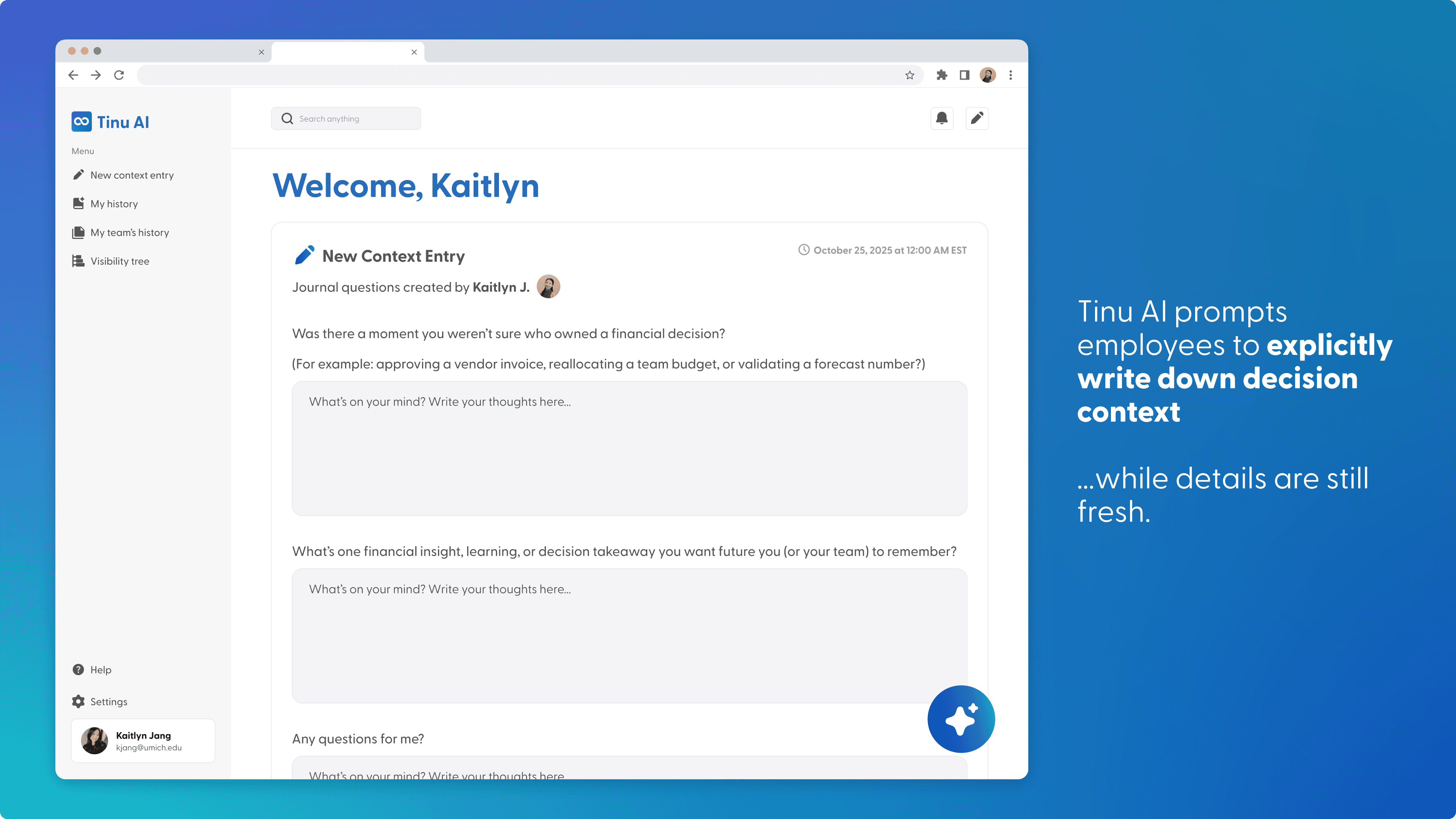
Structured Context Capture (Journal Entry)
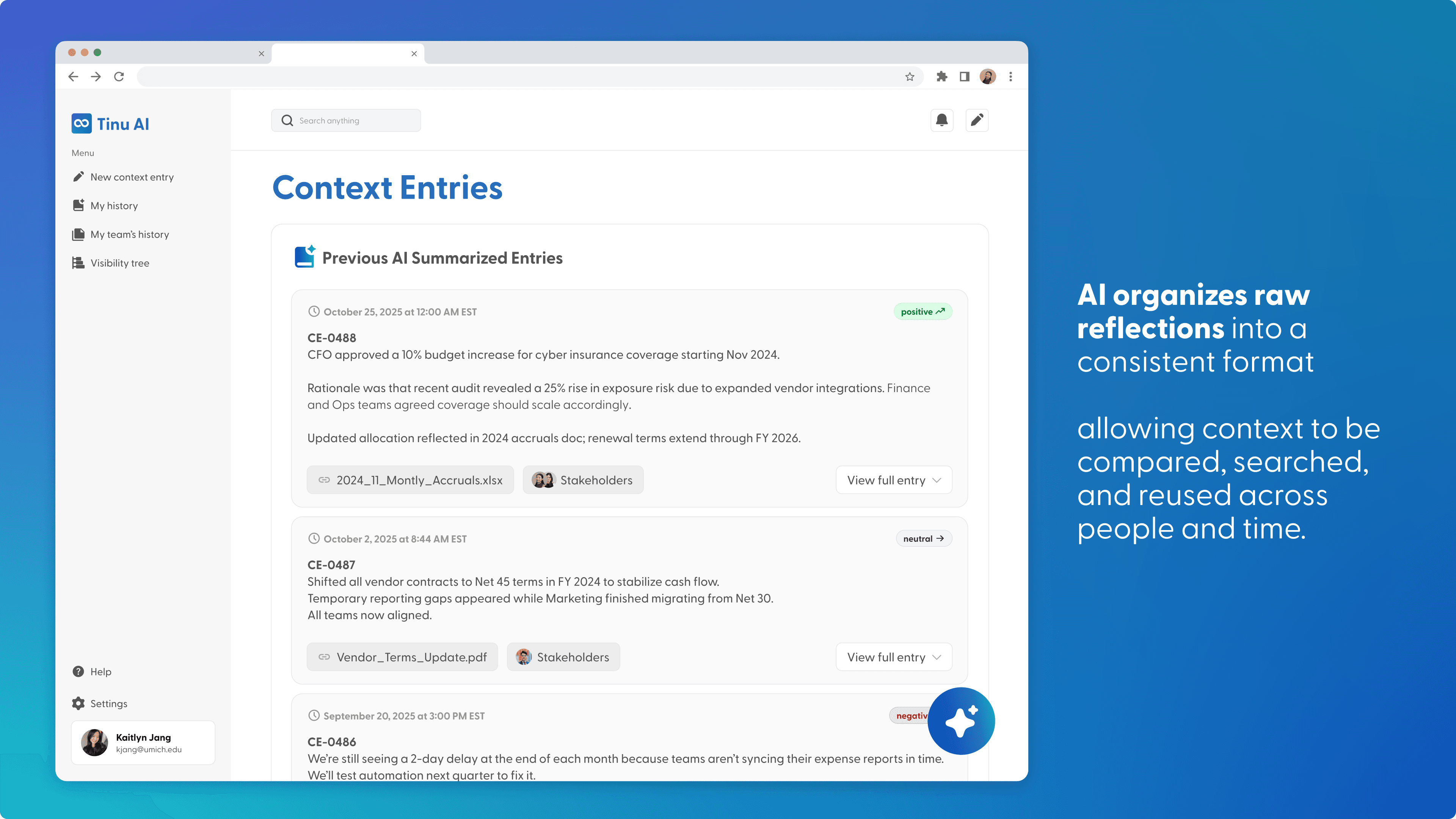
AI Structuring & Summarization
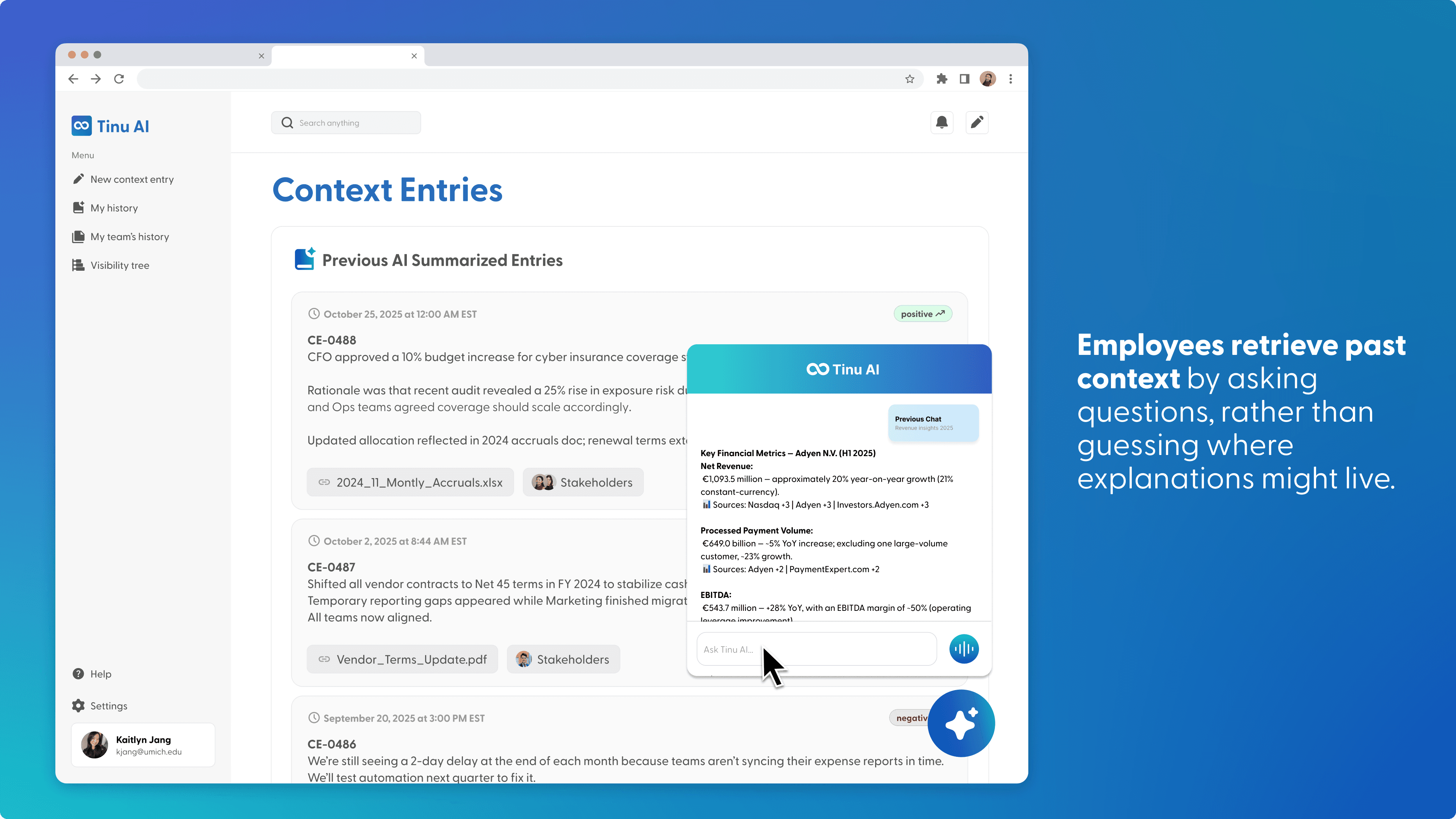
Context Retrieval by Intent (Chat)
In-Workflow Action (plugin)
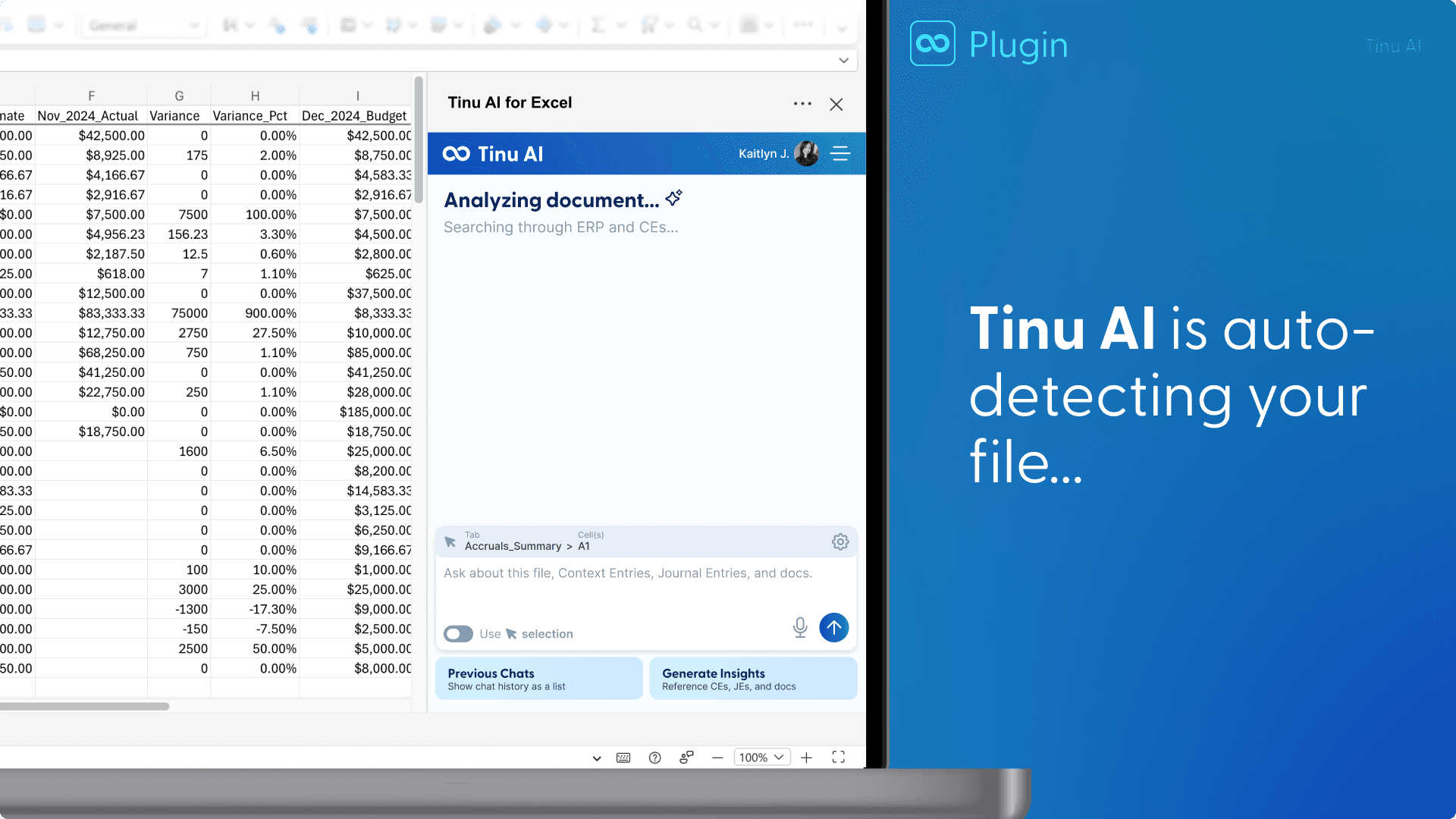
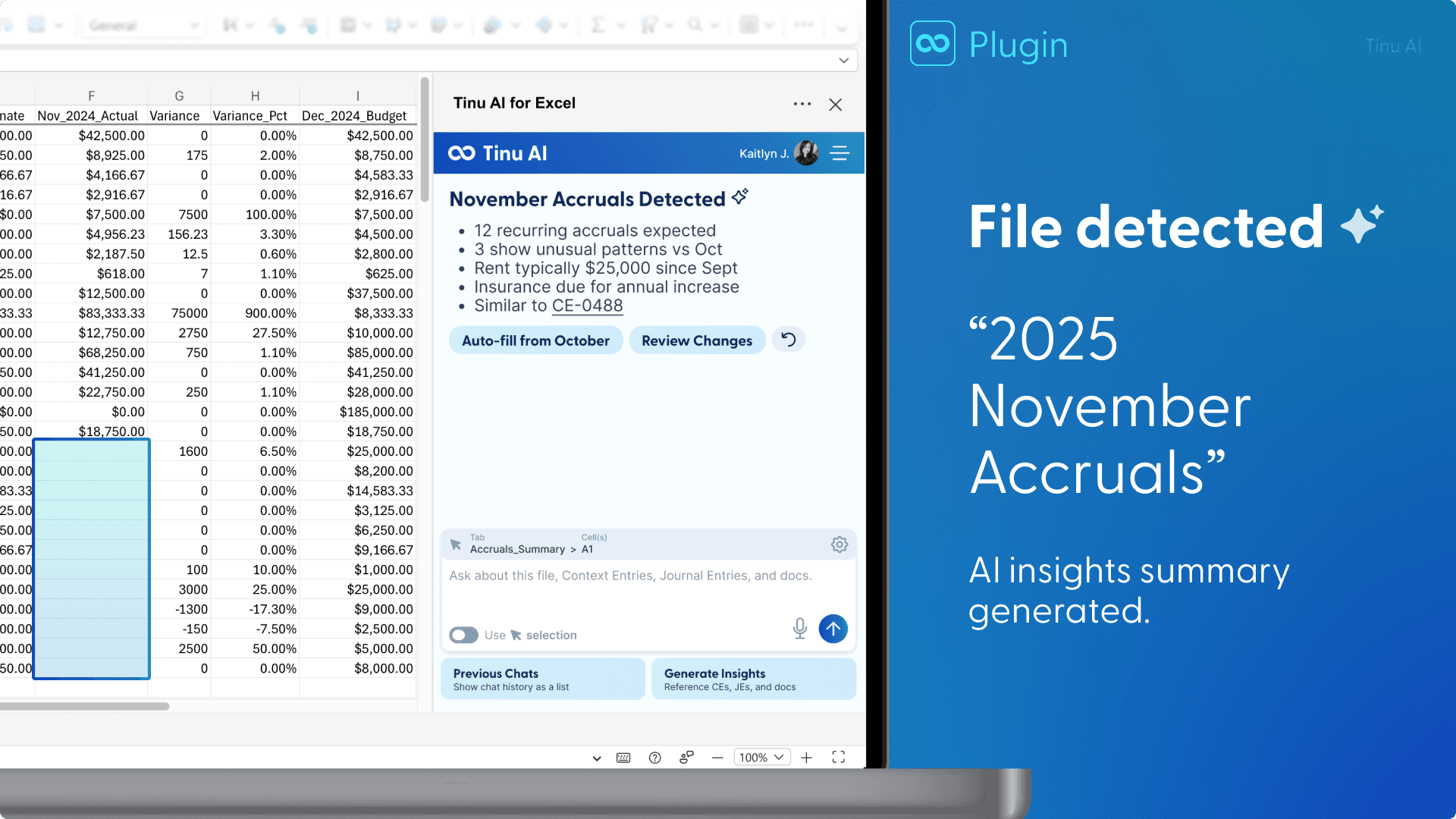
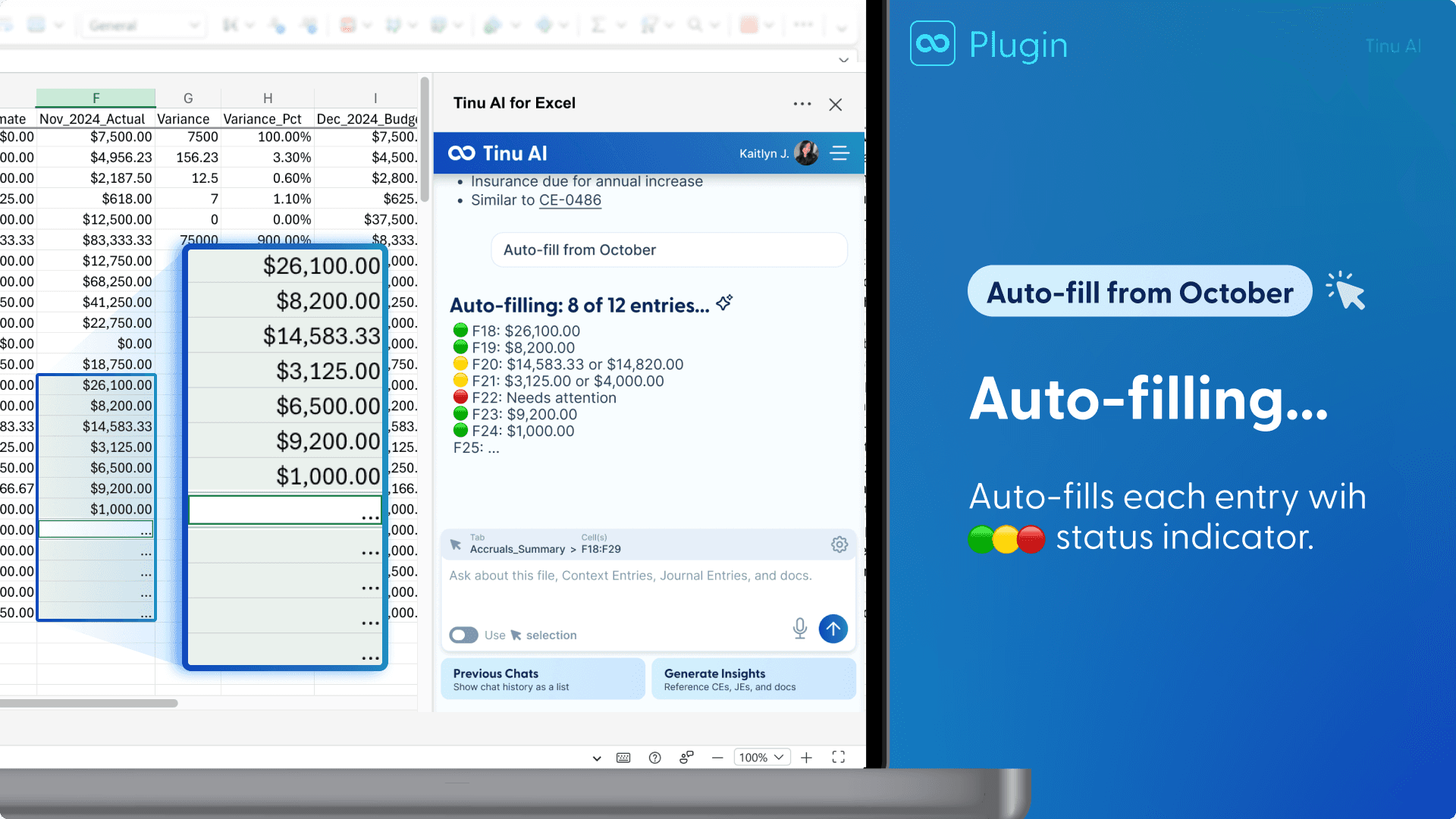
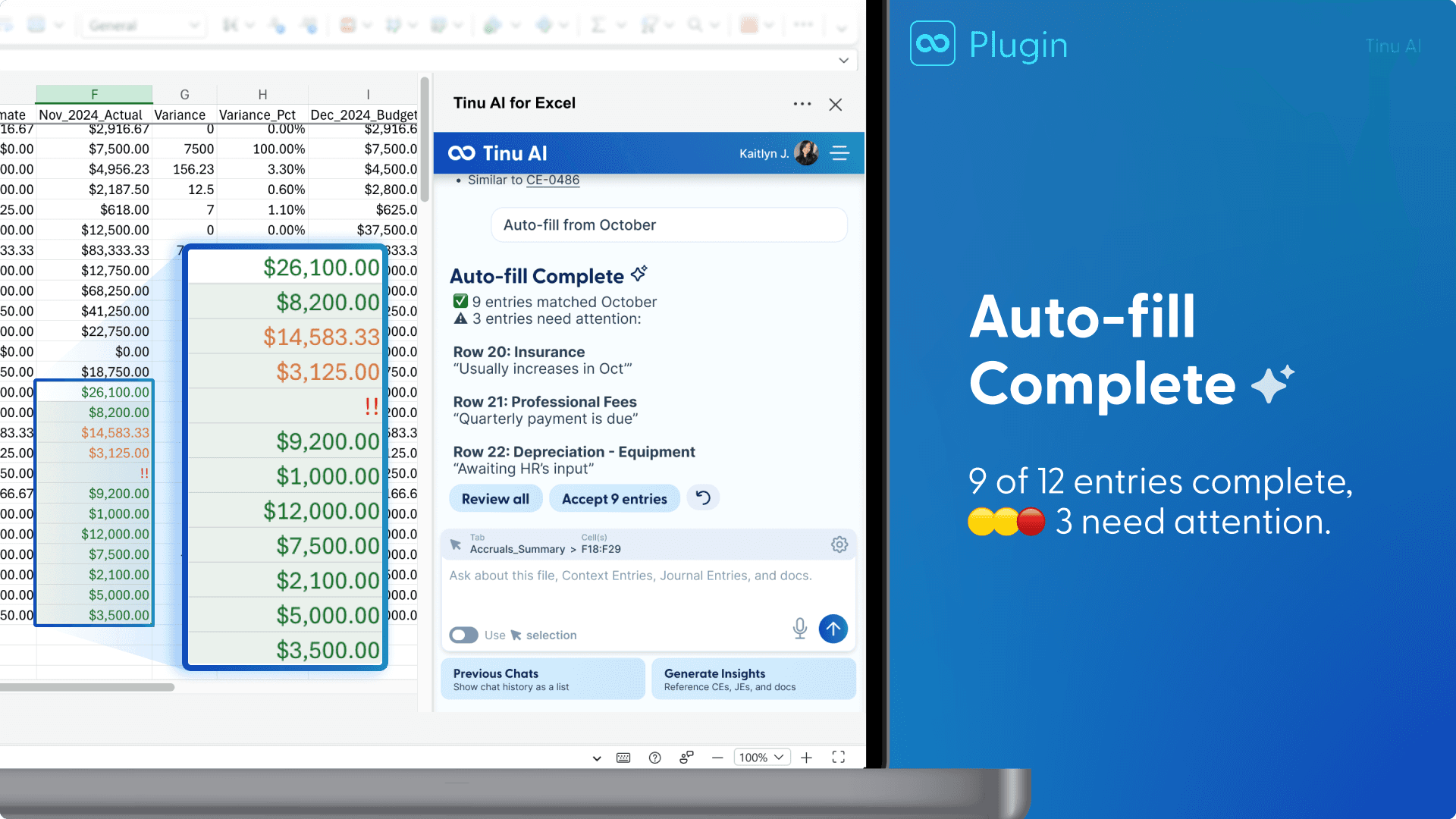
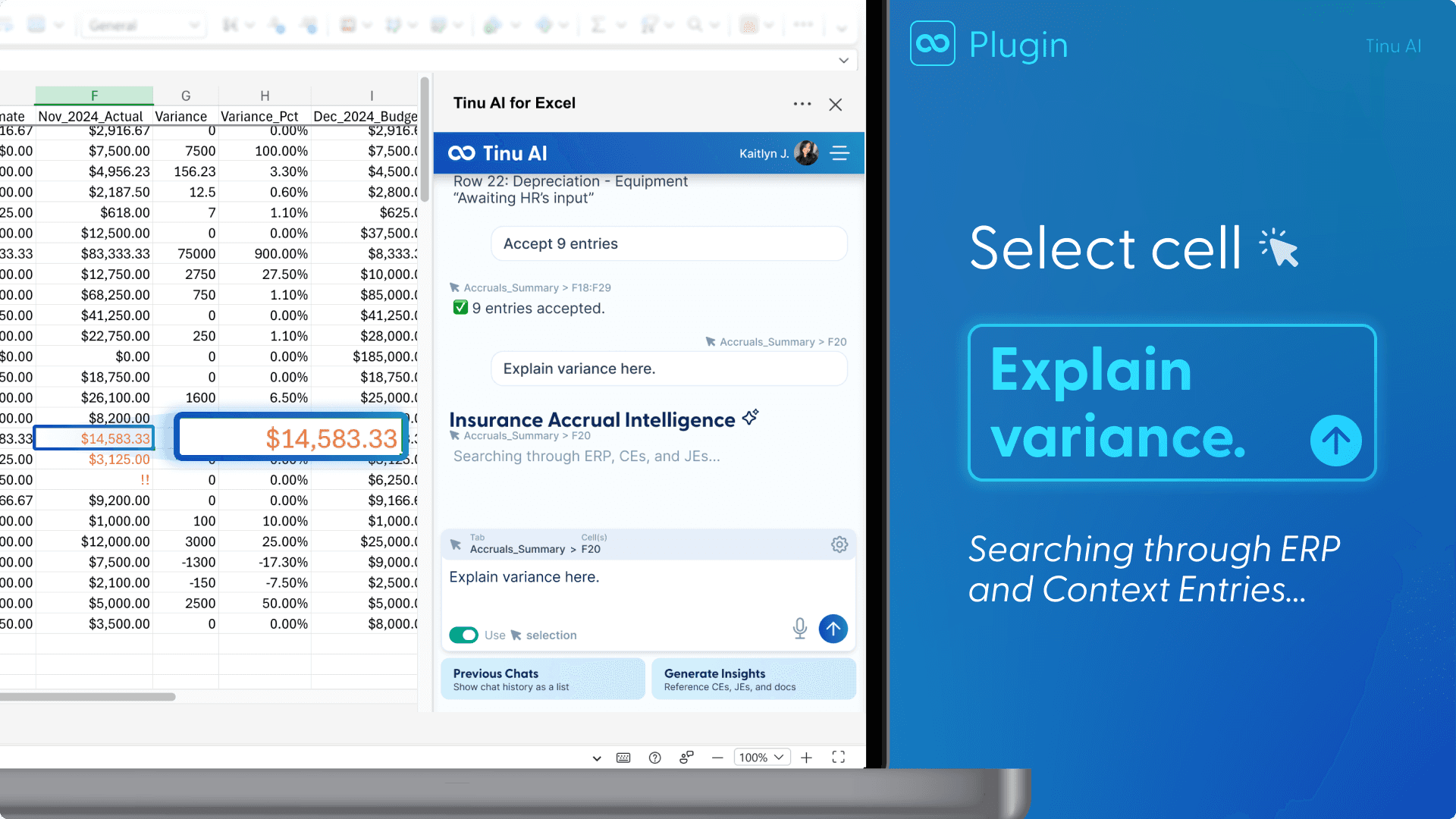
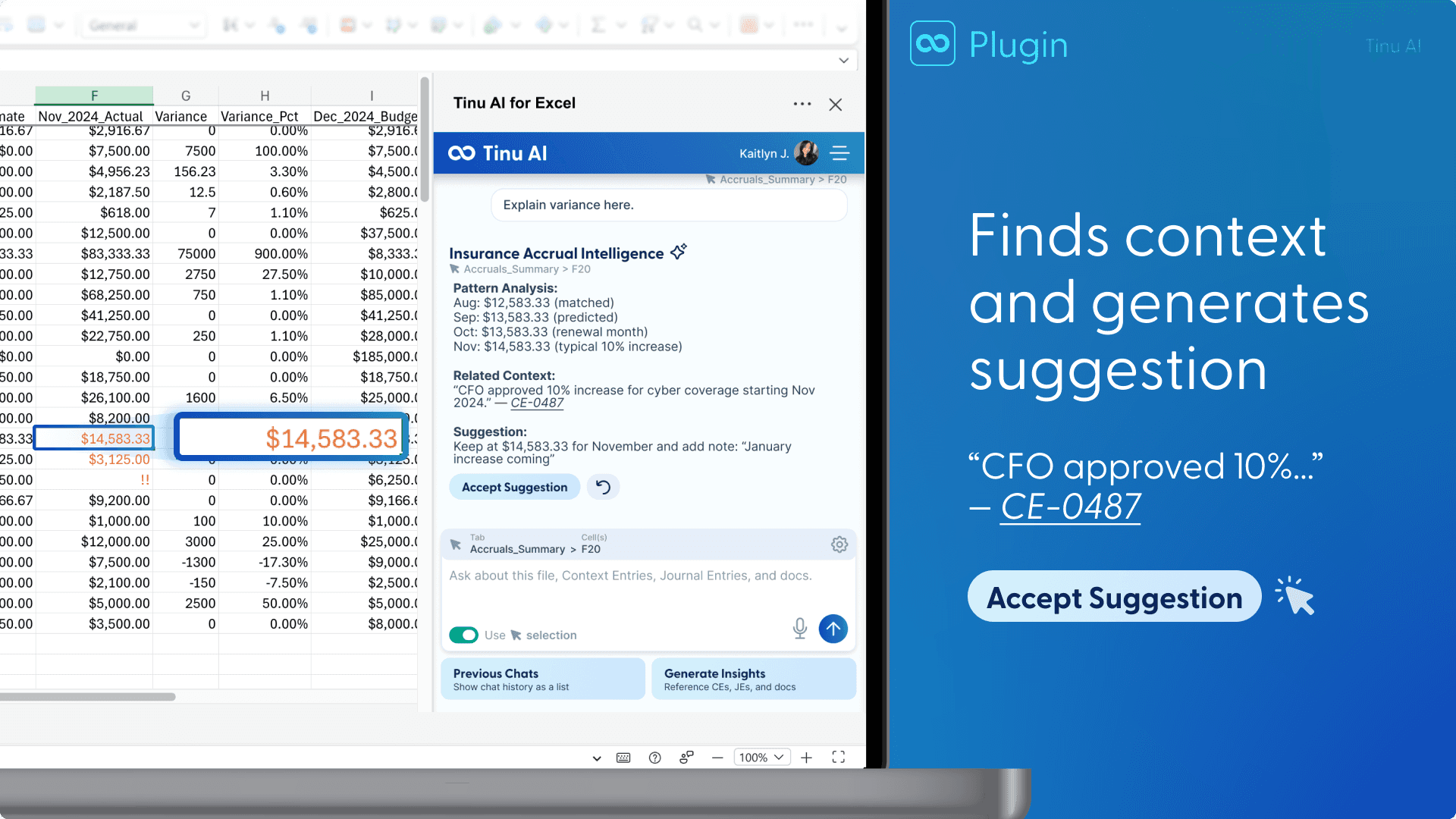
By preserving context across capture, structure, retrieval, and action, Tinu AI turns everyday financial decisions into durable organizational memory.
Impact
Tinu AI transforms fragmented financial work into a searchable, scalable memory layer.
Organizations
Knowledge becomes infrastructure, not tribal memory
Lower turnover cost
Faster analysis cycles
Teams
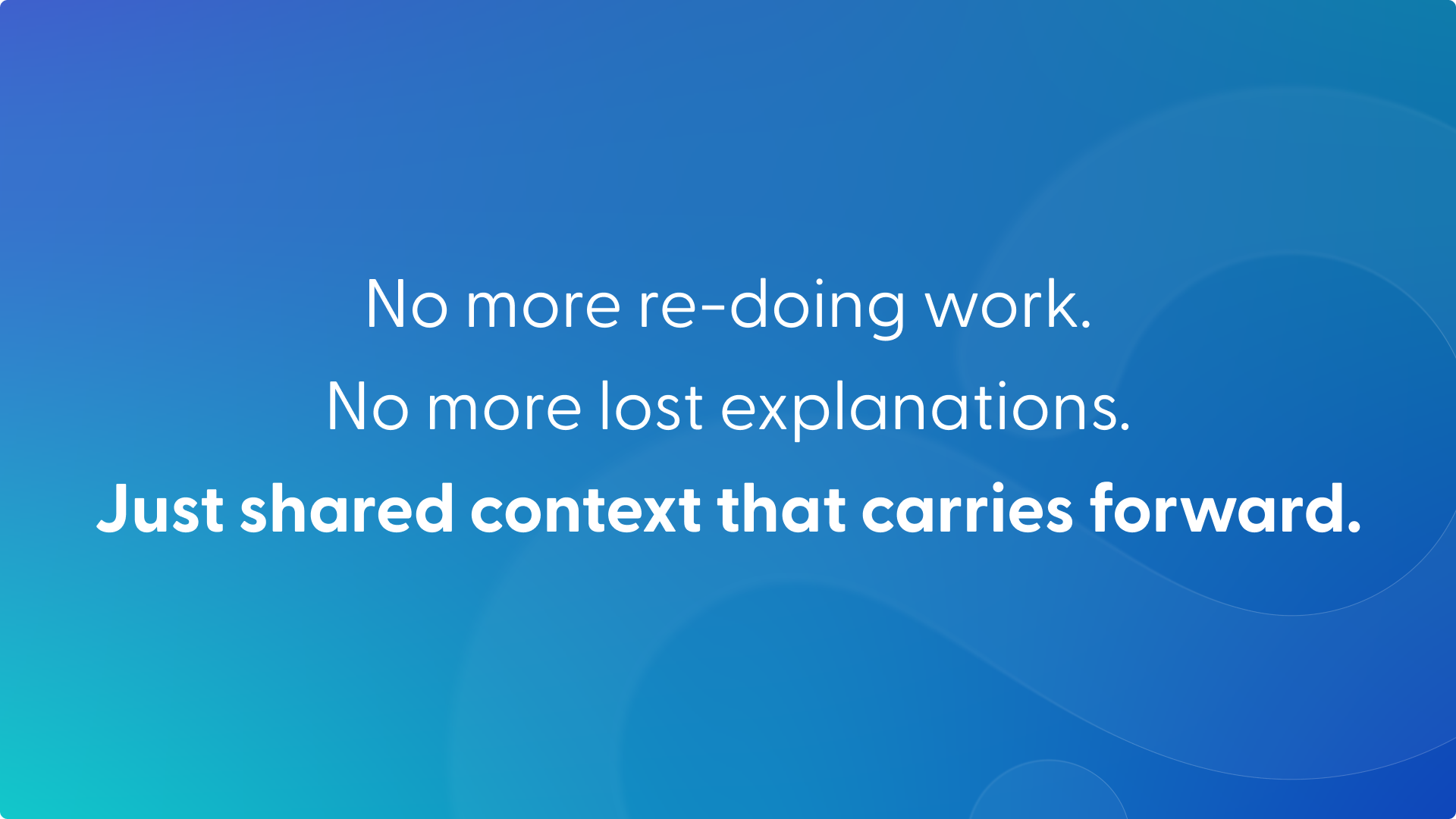
No more lost explanations
Faster onboarding
Seamless handoff when roles shift
Managers
Centralized visibility
Higher-quality weekly updates
Less back-and-forth
We also get a context reinforcement loop within the Tinu AI ecosystem that grows with usage.
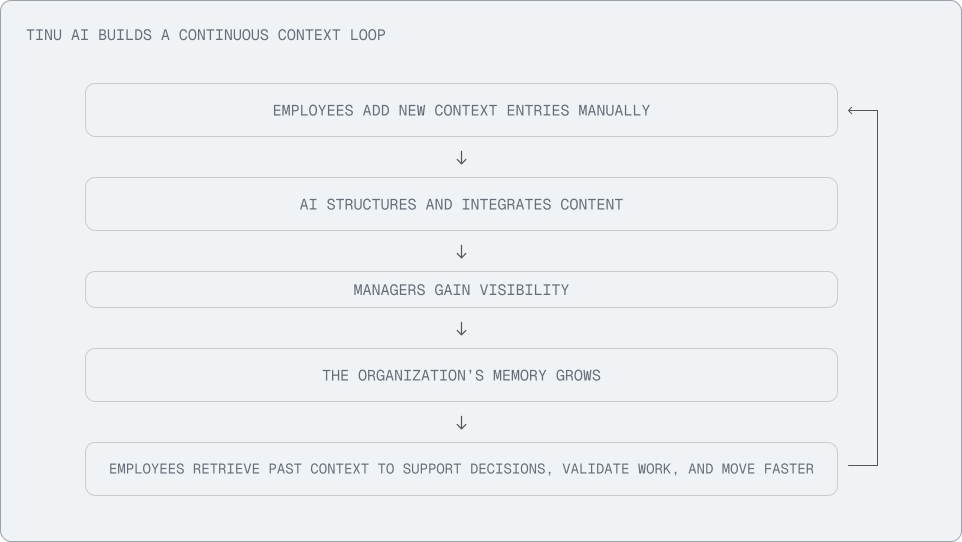
Over time, TinuAI shifts critical context from individual memory into shared infrastructure, making decision-making more durable as teams and roles change.
Iteration #1
What if people are hesitant to share their context?
Not everyone wants to share the context that makes them indispensable. For some, undocumented knowledge feels like job security, which can reduce participation.
Moving forward, this raises an important design consideration: this product must deepen trust, clarify value for contributors, and create incentives that make context-sharing feel safe, fair, and mutually beneficial.
Here are some possible solutions we considered:
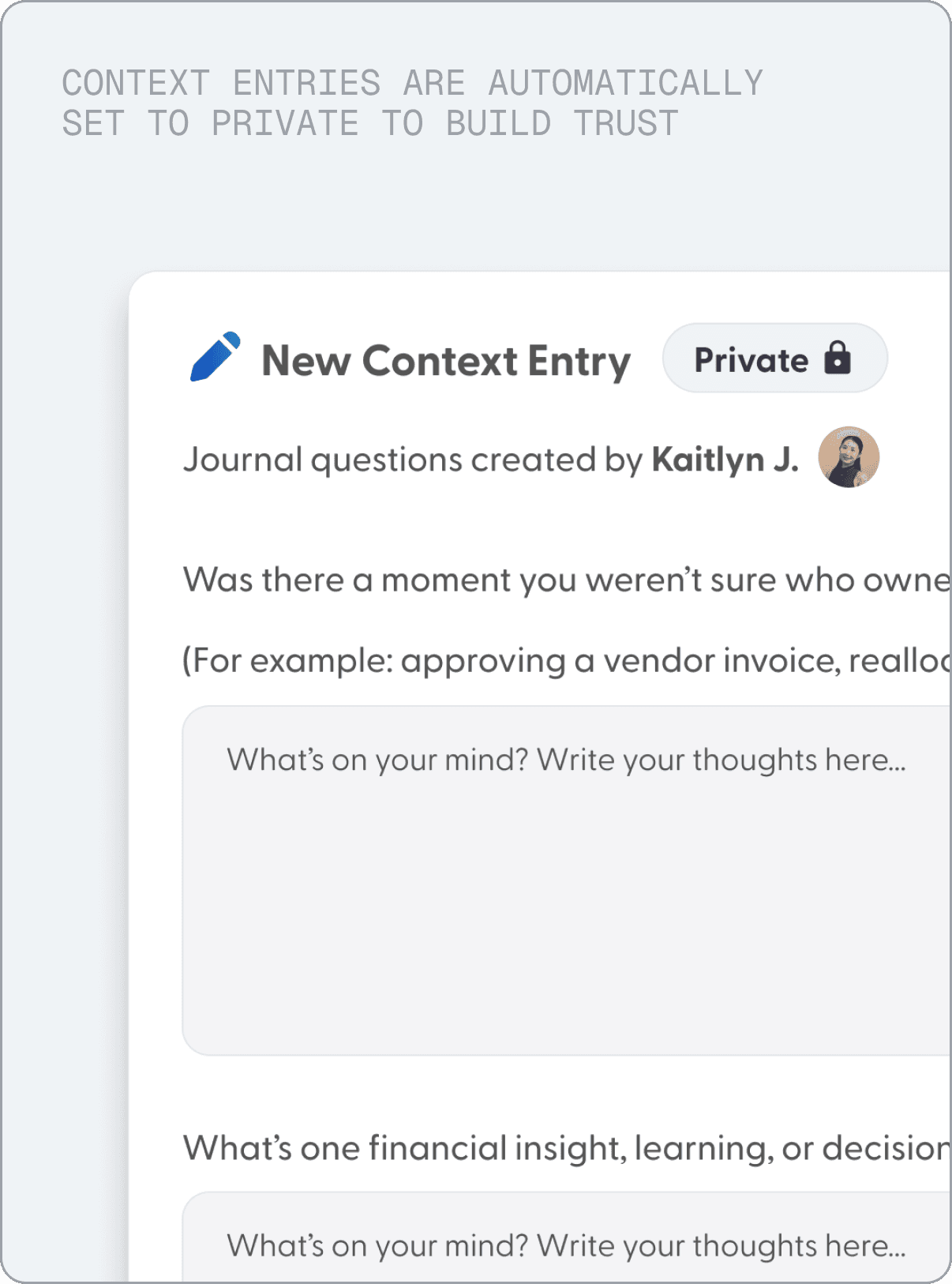
Private-to-public preview:
Contributions start private and users can choose what gets shared.
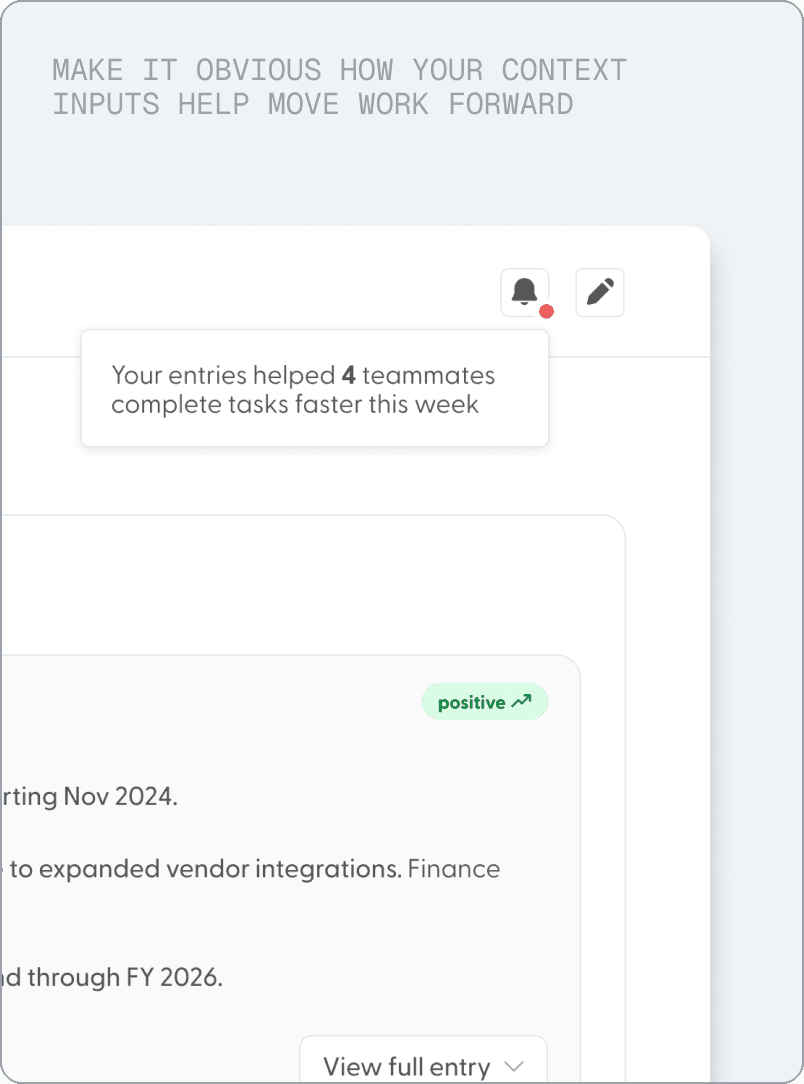
Impact Feed:
We surface the impact of each contribution, making it clear how shared context drives work forward.
Instead of framing context-sharing as giving something up, we want to design the product to make it high-leverage for the individual employee.
iteration #2
What if employees input low-quality context?
Not all context is equally useful.
In the moment, employees may log vague or incomplete context entries—especially when time is limited or stakes are unclear. Low-quality inputs can dilute shared knowledge and reduce trust in the system.
Here we can see an example of a low-quality vs high-quality context entry.
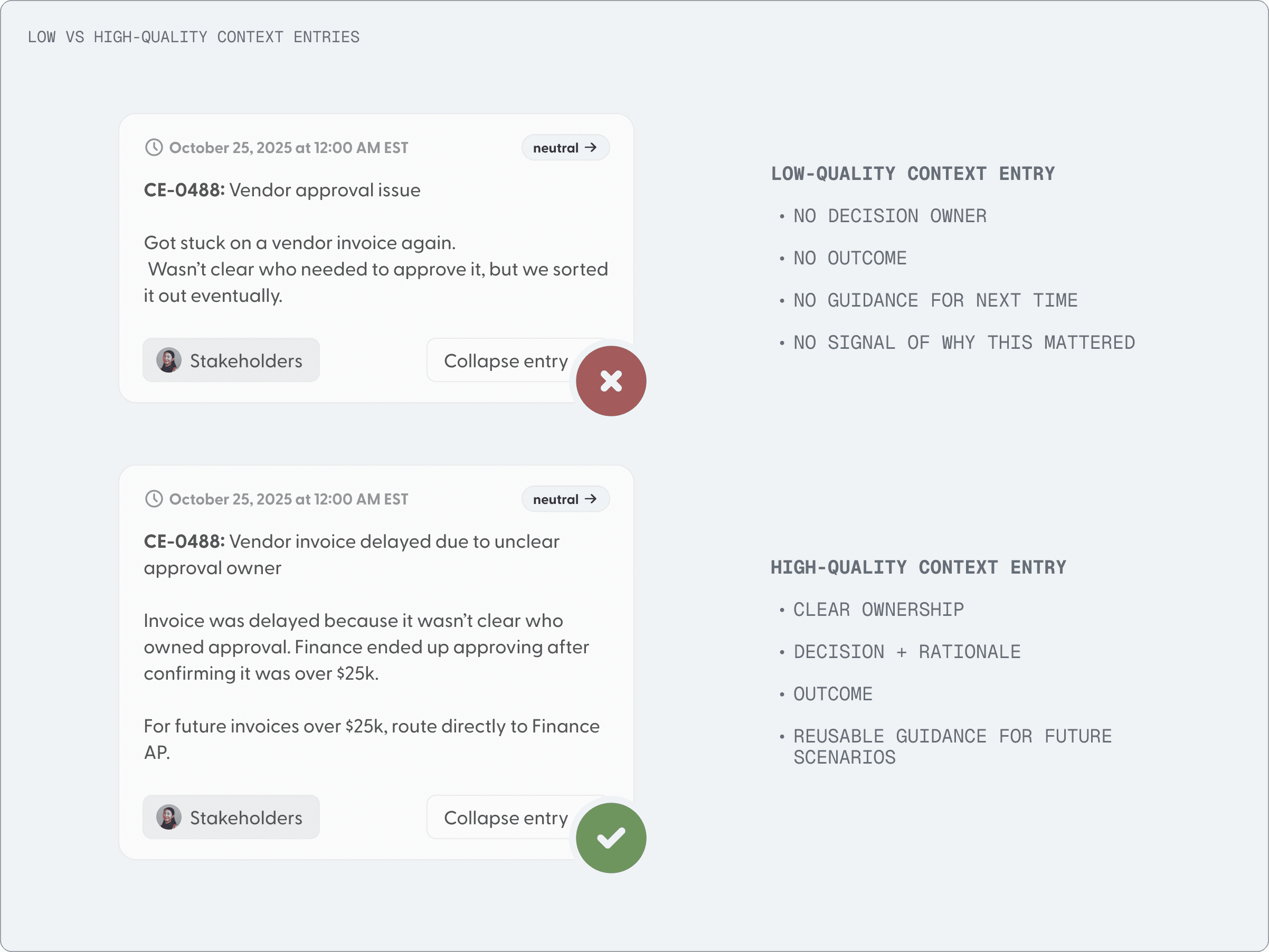
One of the possible solutions we considered:
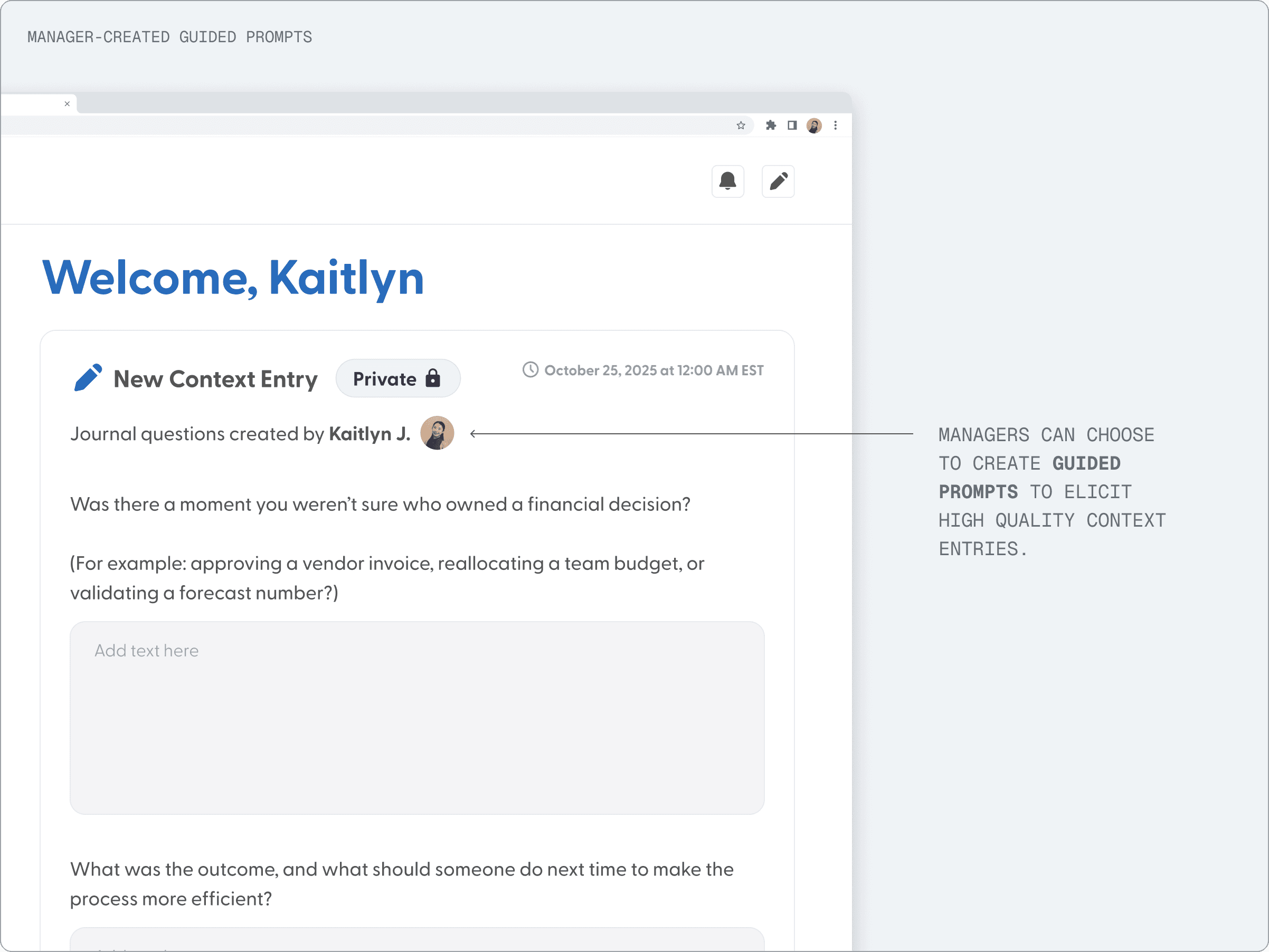
Manager-created prompts provide structure at the moment of capture:
By defining specific questions, managers help standardize what kind of context matters while leaving employees free to answer in their own words.
And by standardizing what information gets captured, these prompts help produce consistent, high-quality context entries that can be reused over time.
Reflection
What I Learned
Context loss is a systems problem, not a people problem.
I learned that missing context isn't caused by people failing to document. It's caused by systems that don't support capture, structure, and retrieval of that context at the right moments.
Early on, it was pretty tempting to design a documentation app enhanced with AI capabilities to predict what the lost context might've been. However, we found through our interviews that the pain point extended beyond just one workflow.
Reframing the problem as context decay across a system led to a more effective solution: a cohesive memory layer on top of your pre-existing workflow.
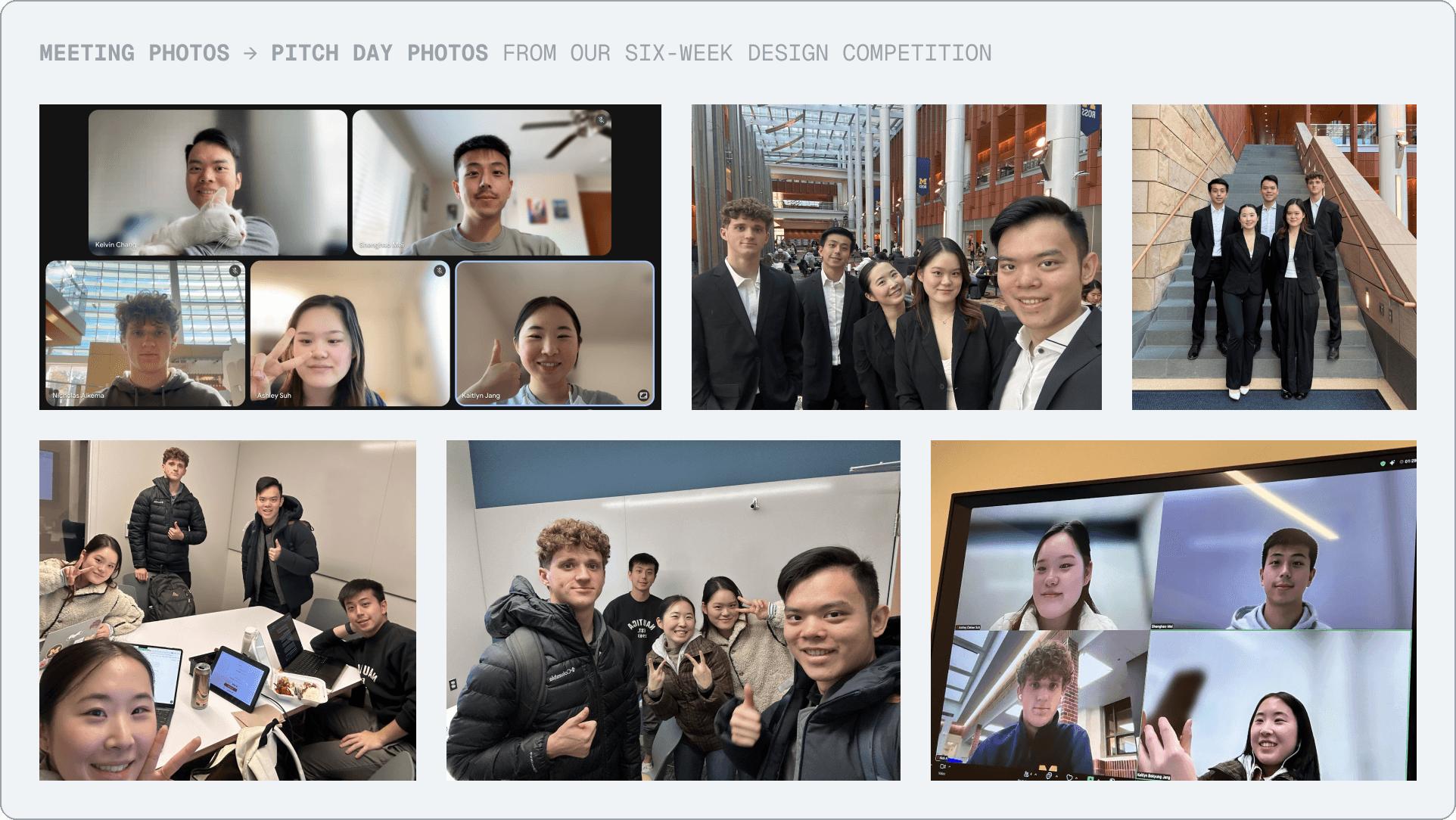
Among 72 teams, Tinu AI earned a top-three spot in the Fintech track at the Tech Innovation Jam.
Thanks for reading!