Designing a Personalized Learning System for Soft Skills
Role
Product Designer
Industry
Mobile EduTech
Timeframe
Apr 2024 (1 month)
Tools
Figma
FigJam
Adobe CC
Skills
Product Design
User Research
Visual Identity
The problem space
How might we enhance learning approaches to better align with modern needs?
The term "modern needs" immediately brings to mind the rapid advancements in technology (AI, automation, etc) and the evolving strategies businesses employ to hire and retain talent.
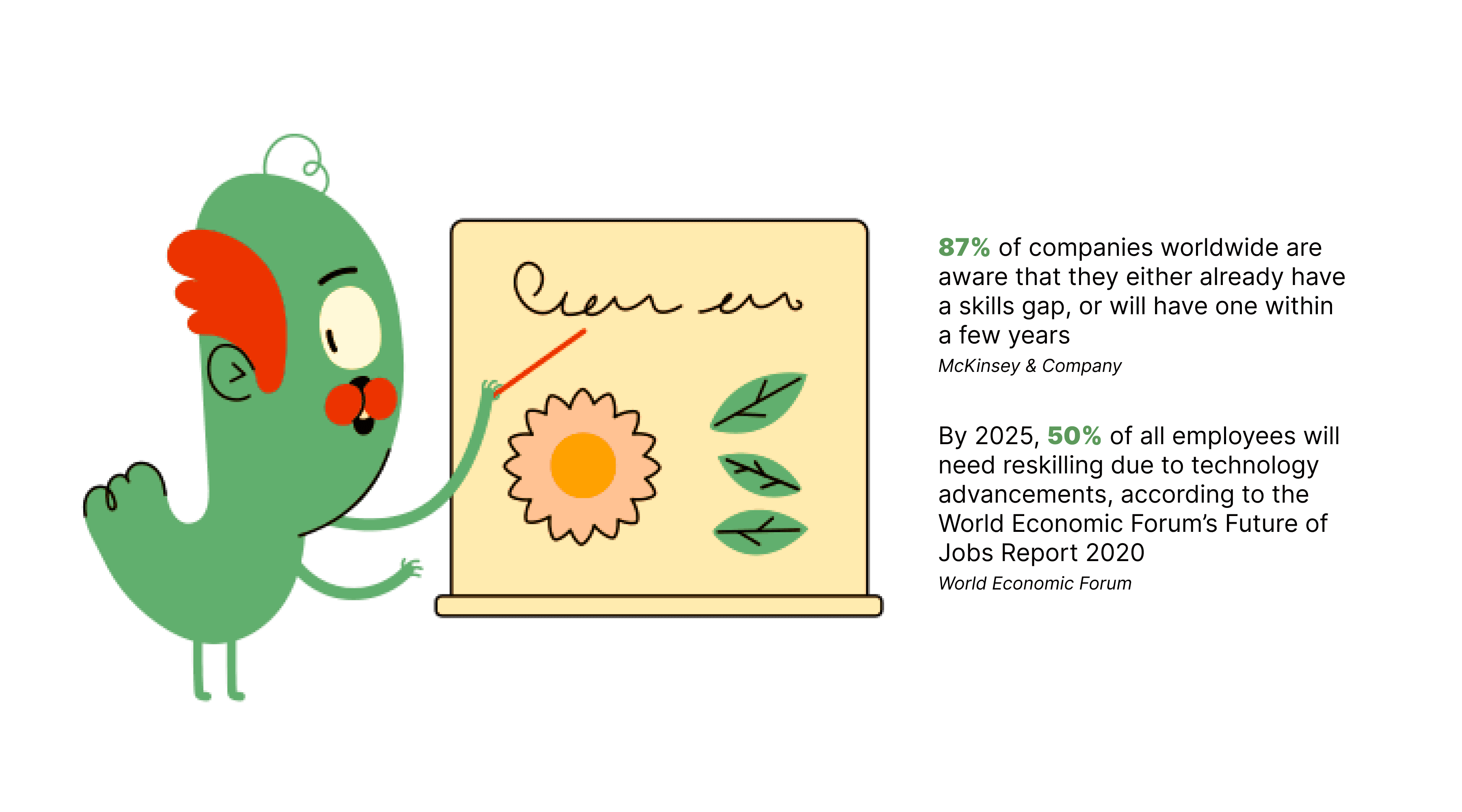
Due to these rapid changes, there is a growing disparity between the skills and knowledge required by the modern workforce and the tools to equip employees with those skills.
People who may want to enter the workforce need to do more training and research than ever before (and this is not just for technical skills, but also soft skills!)
primary research
Delving into the problem space with user interviews & surveys
But before delving into this problem, we wanted to get to know our problem space better, so we held interviews and surveys with 13 participants who are active participants in todays workforce.
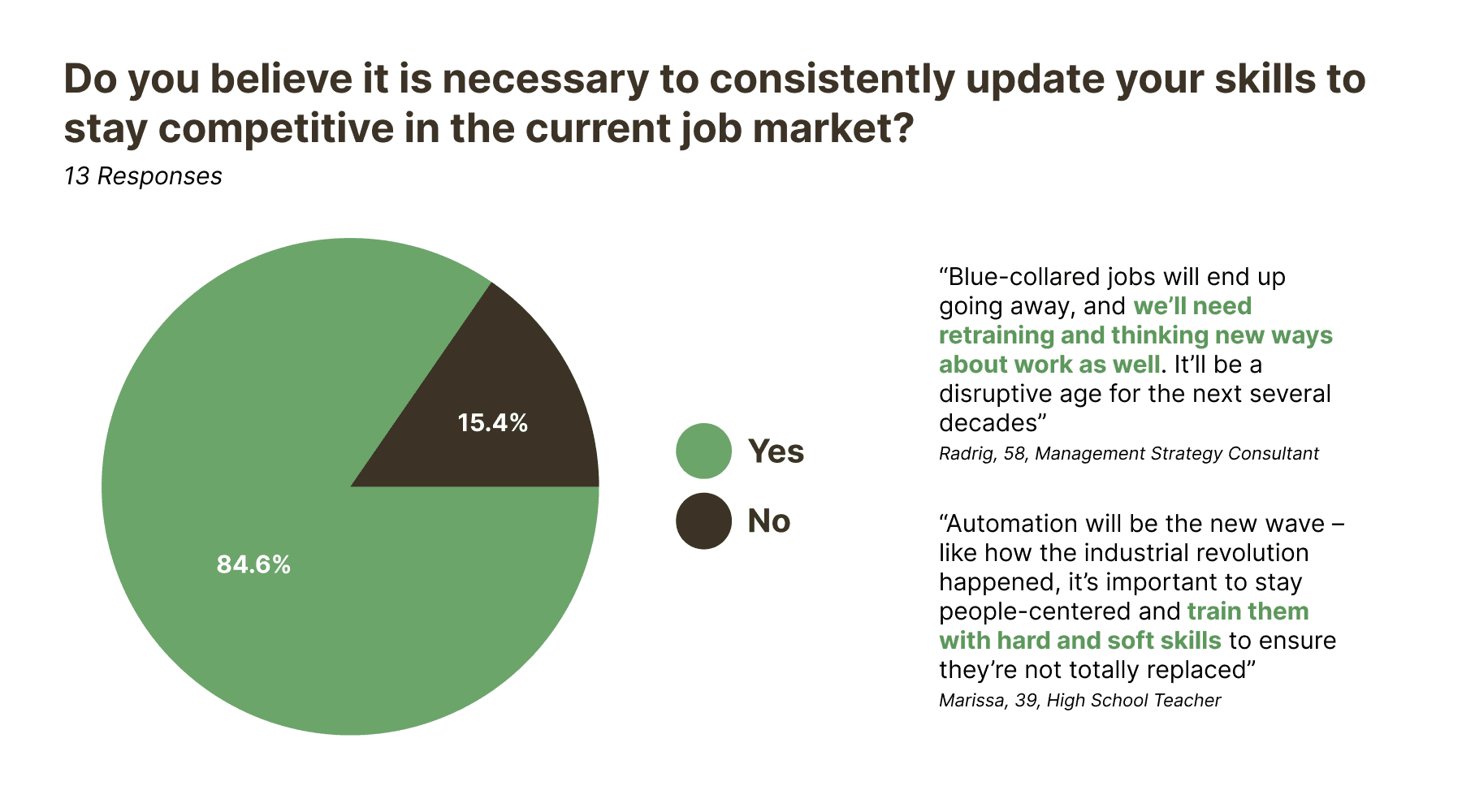
What we found was a pretty strong skew toward retraining, mostly driven by fear of automation. The majority of respondents felt like change was inevitable, and the only way to stay relevant is to keep up-skilling.
That got us thinking about workers who might be more directly impacted, especially blue-collar workers (or service workers) who may need to transition into white-collar roles.
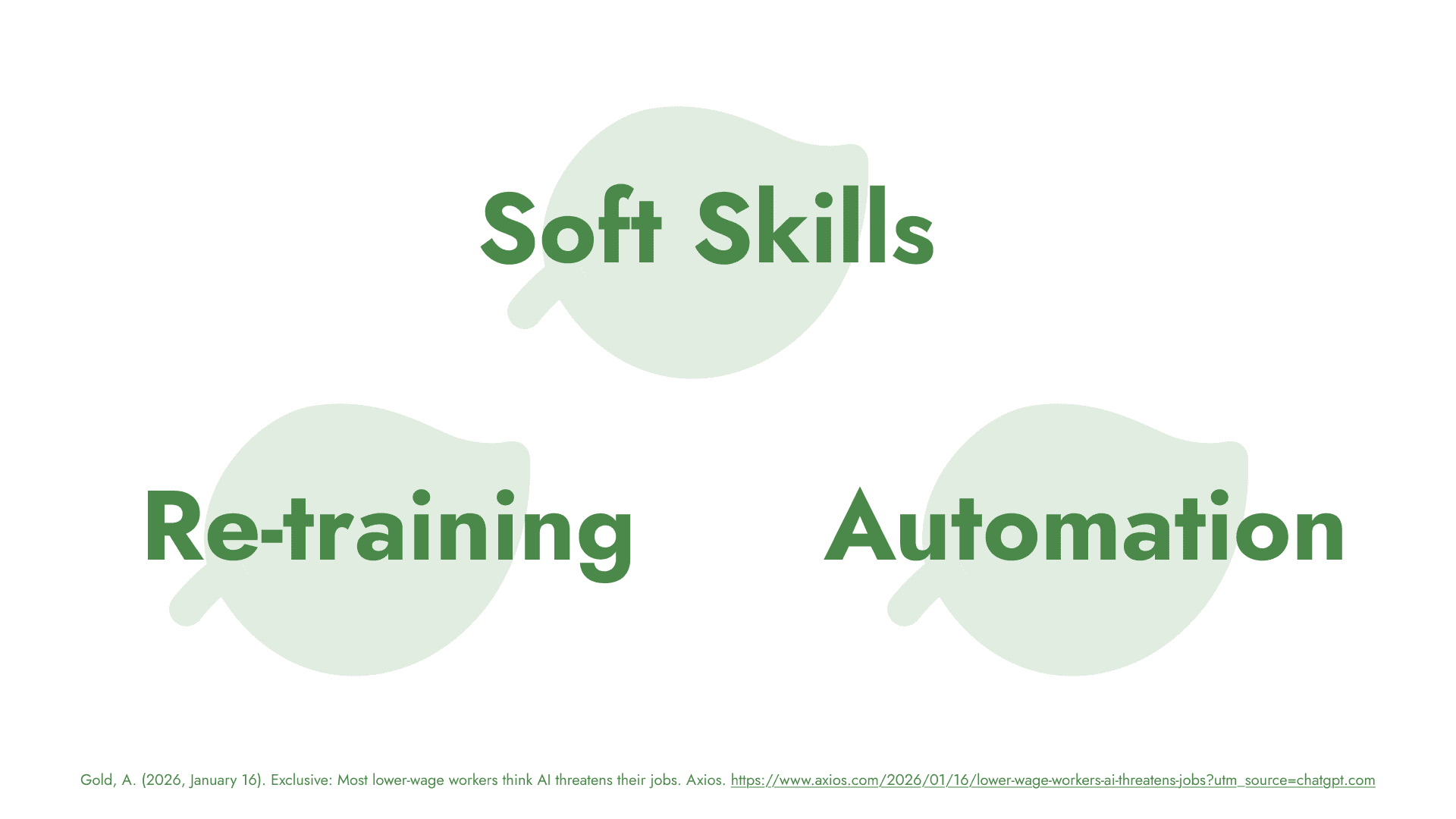
We also found through our secondary research that more than half of lower-wage US workers believe AI threatens their job security with upskilling as the solution to adapting to this post-AI job market.
But here's the thing: transitioning to a new role isn't just about learning new technical skills. It's also about picking up the soft skills that corporate environments quietly expect. Things like how to speak up in meetings, how to write a professional email, how to present your ideas, how to navigate workplace dynamics, etc.
A lot of us take those skills for granted because we've grown into them over time. But if someone is switching industries entirely, where do they actually learn that?
Exploring possible solutions
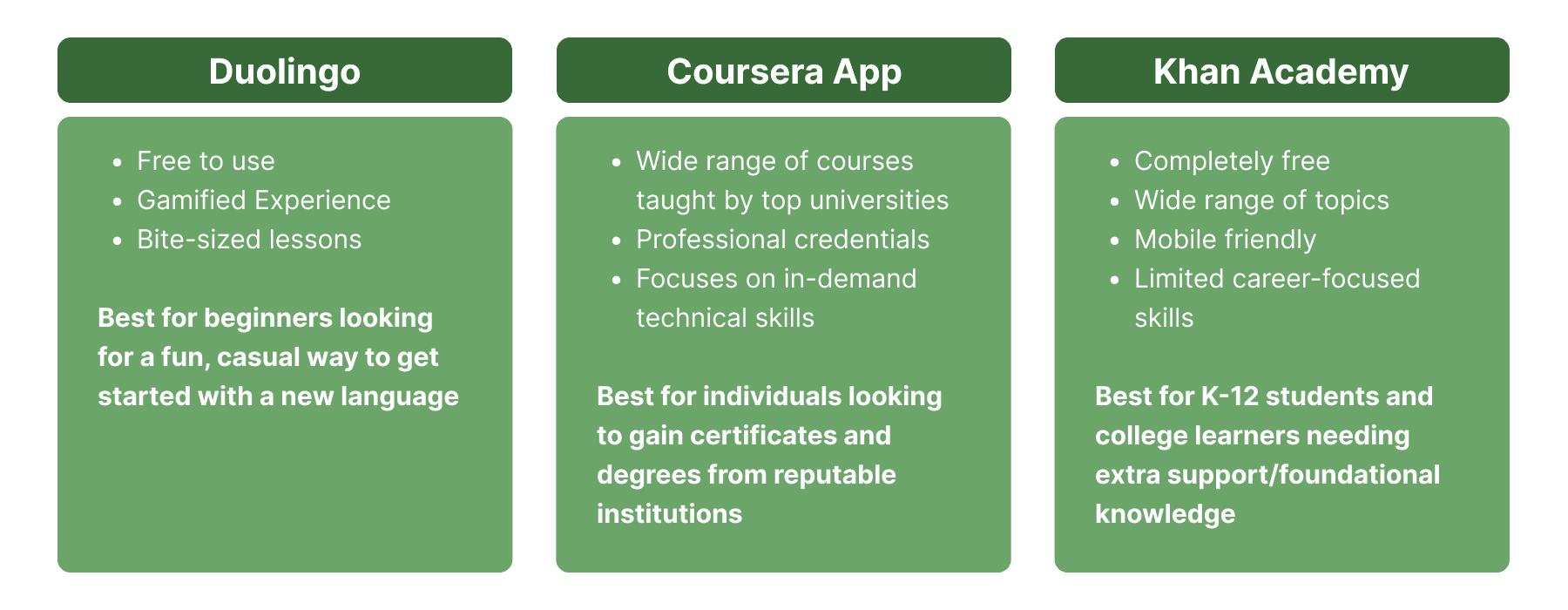
Existing solutions often focus on academic education, foundational subjects, and language learning.
BUT they overlook the critical need for accessible platforms that provide workplace-contextual lessons.
understanding our users
Meet Jonathan, a Hopeful Job Transitioner
Using aggregated information gleaned from our survey and interview participants, we crafted a persona for a better understanding of user pain points and needs.
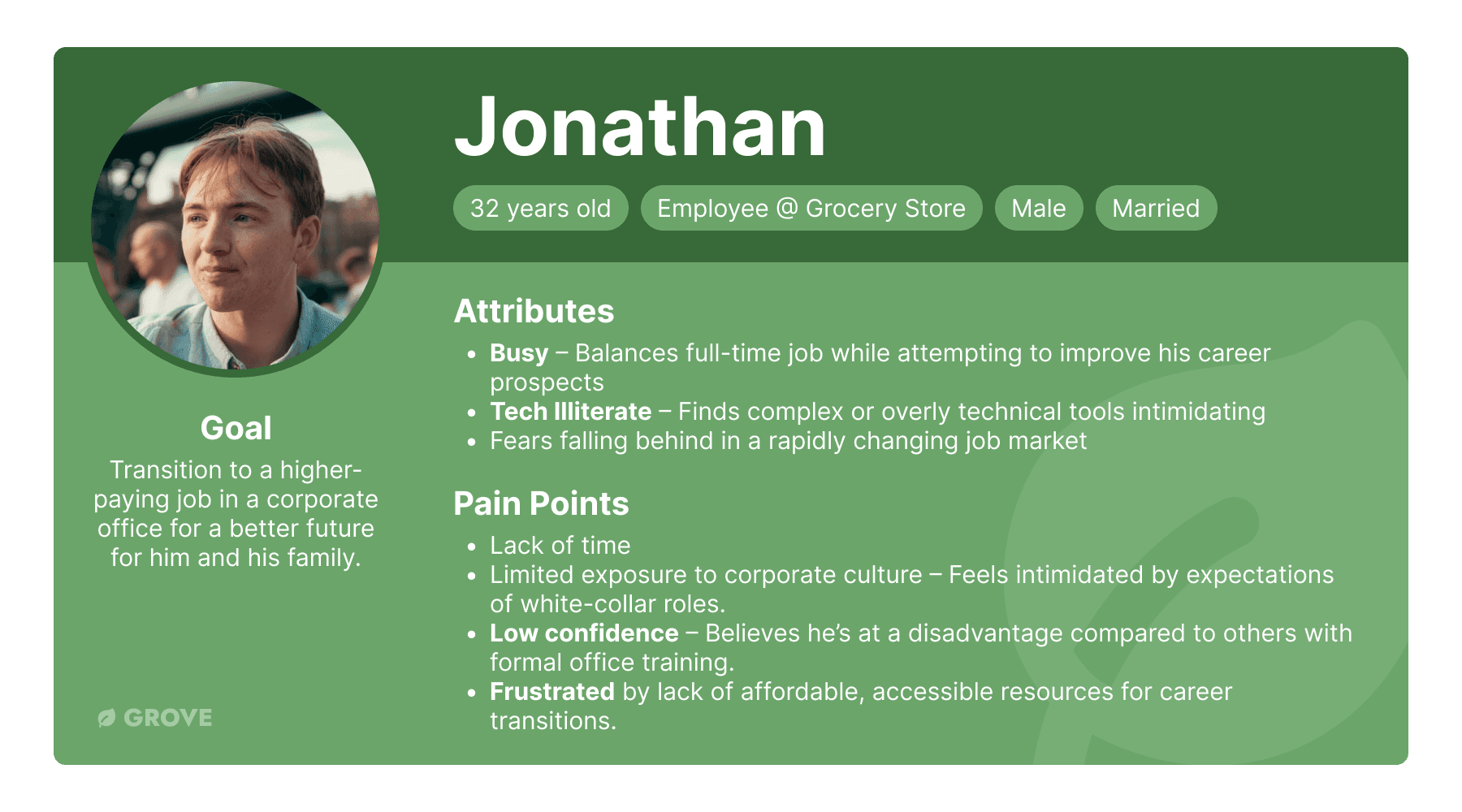
Meet Jonathan: He recently got laid off at his job at a grocery store because they implemented AI check-out systems.
He has limited exposure to corporate culture and has low confidence, which gives him the belief that he does not belong in an office space.
But due to the changes in the workforce, he has no choice but to adapt.
This is where our solution comes in to help.
Narrowing our scope even further
How might we provide a platform to help blue-collar and service workers…
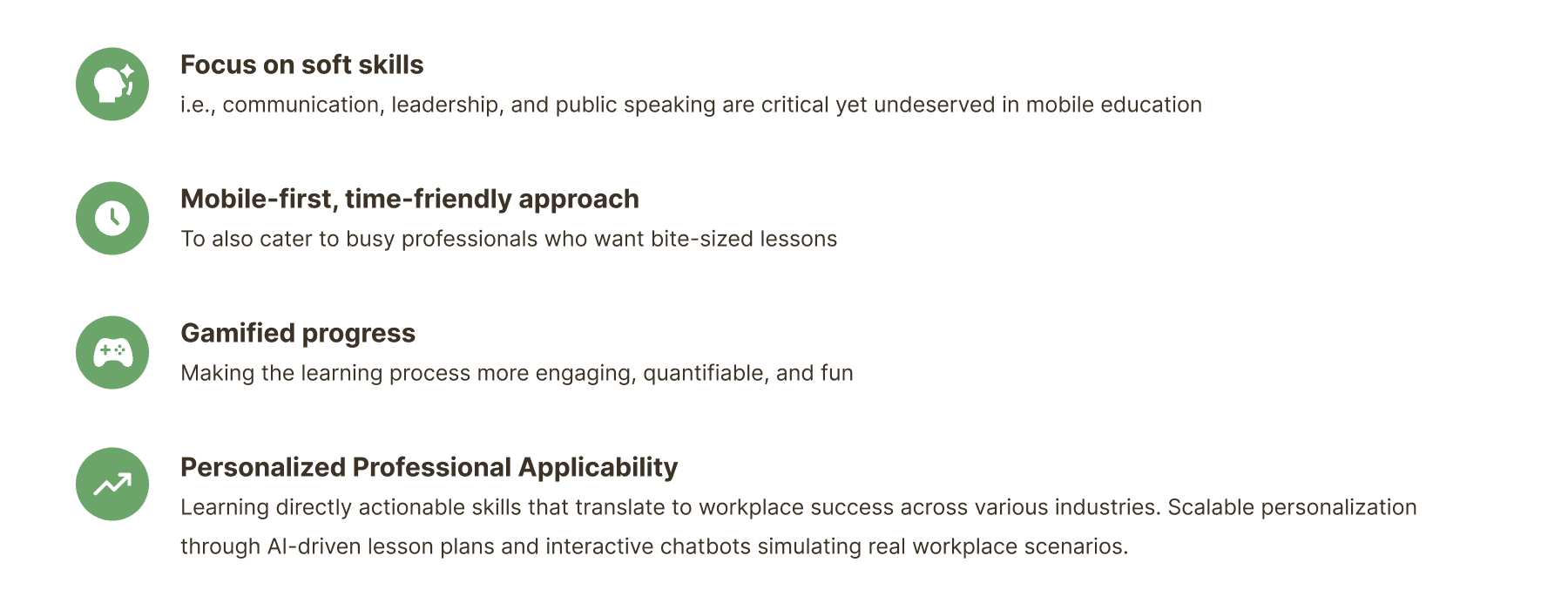
build essential and transferable soft skills tailored to modern job market demands?
We wanted our solution to fill a market niche while effectively addressing the problem, so during the ideation process, we focused on several key factors.
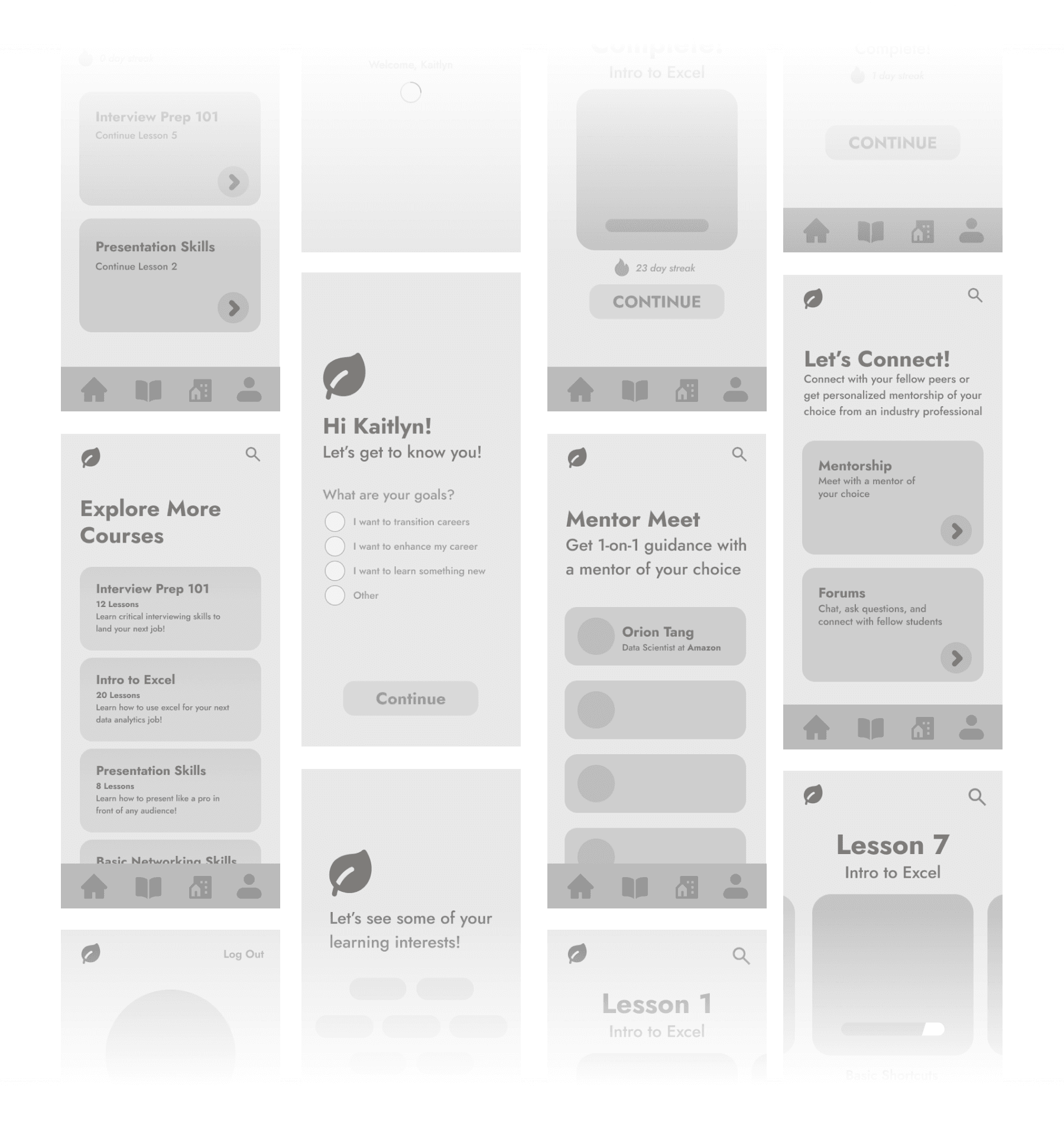
Crafting the visual identity of grove
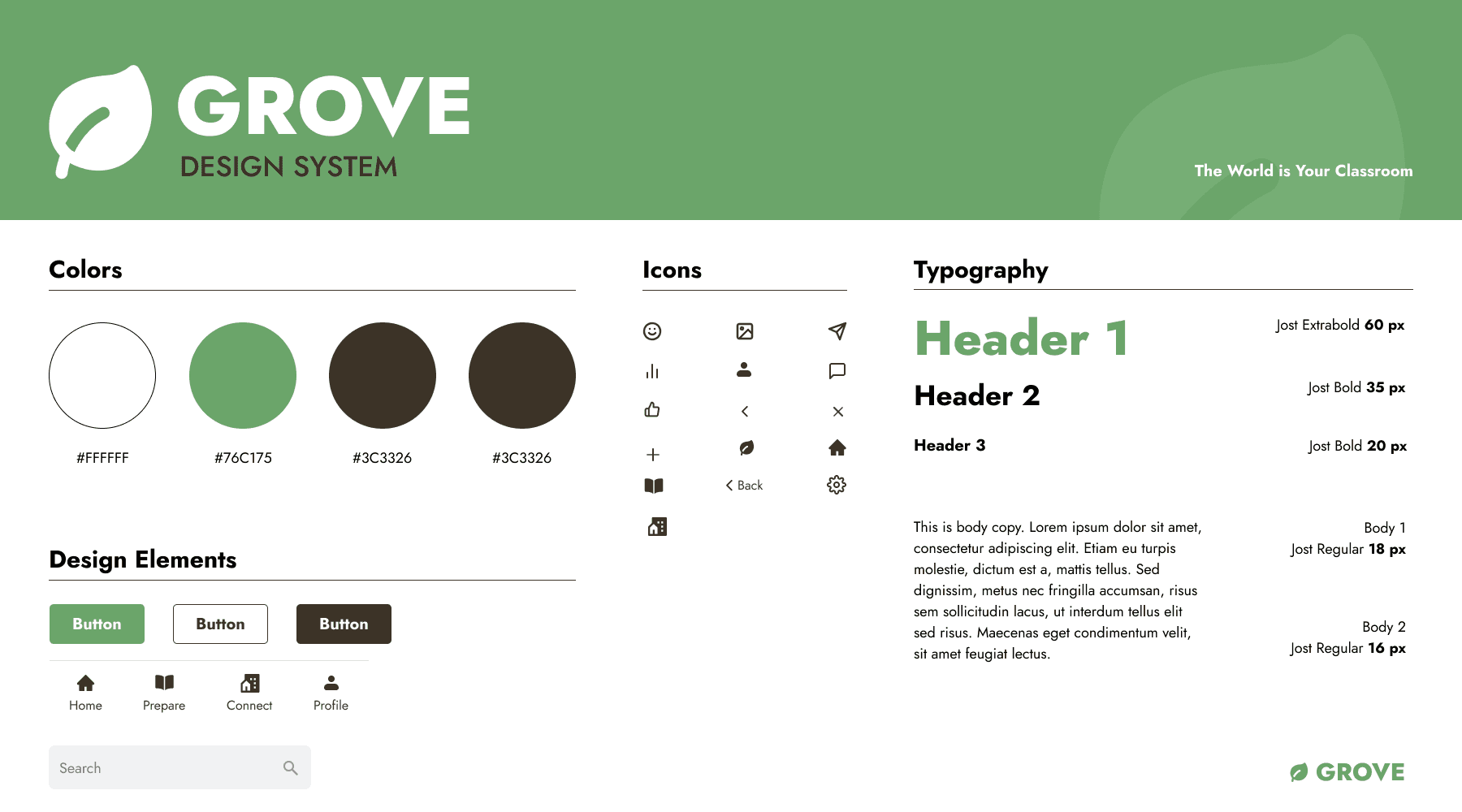
Building a design system that inspires learning
To reflect the richness and enjoyment of learning, we developed a vibrant visual identity centered around the color green, symbolizing personal growth and skill development.
Final Solution
And with that, we arrive at our solution.
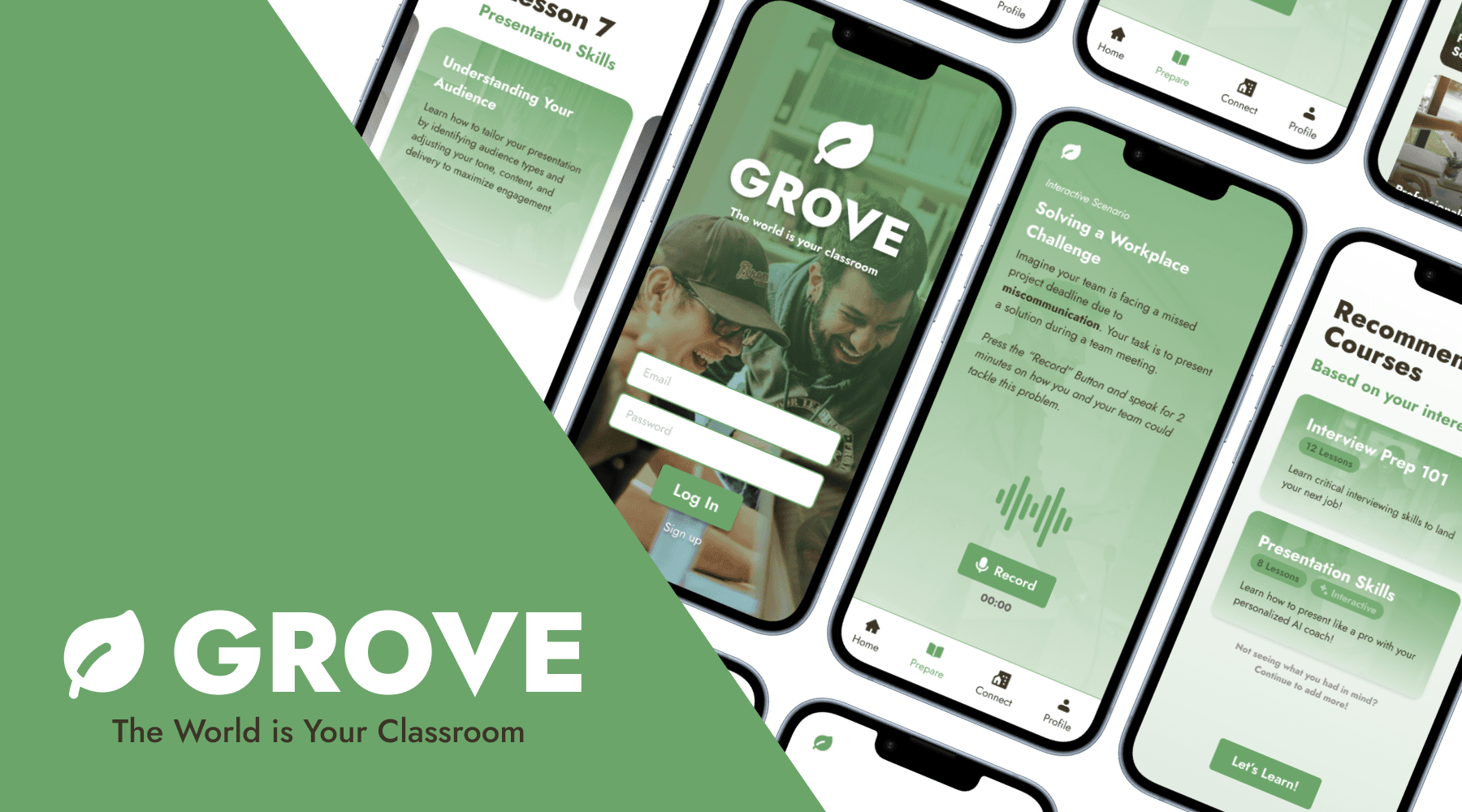
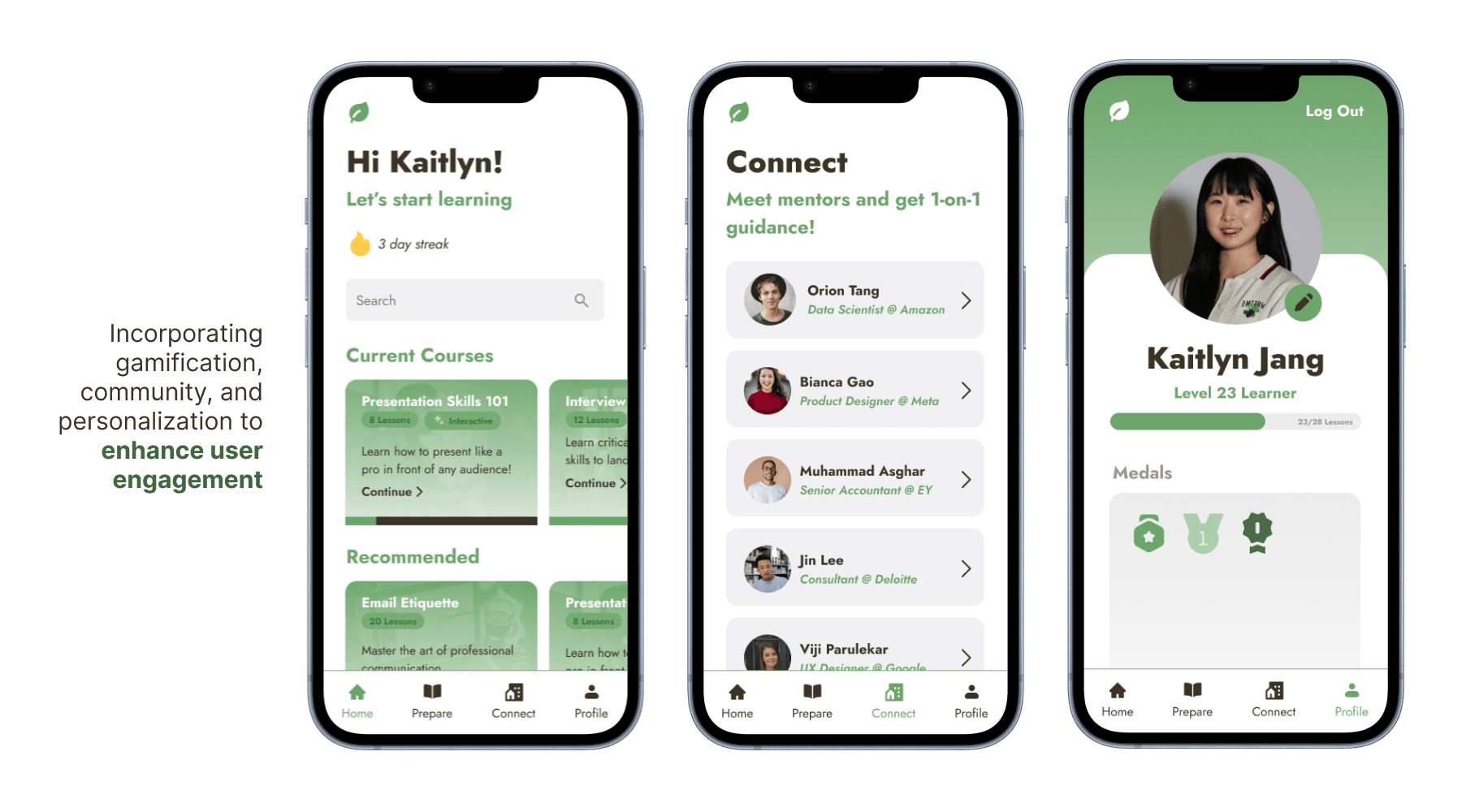
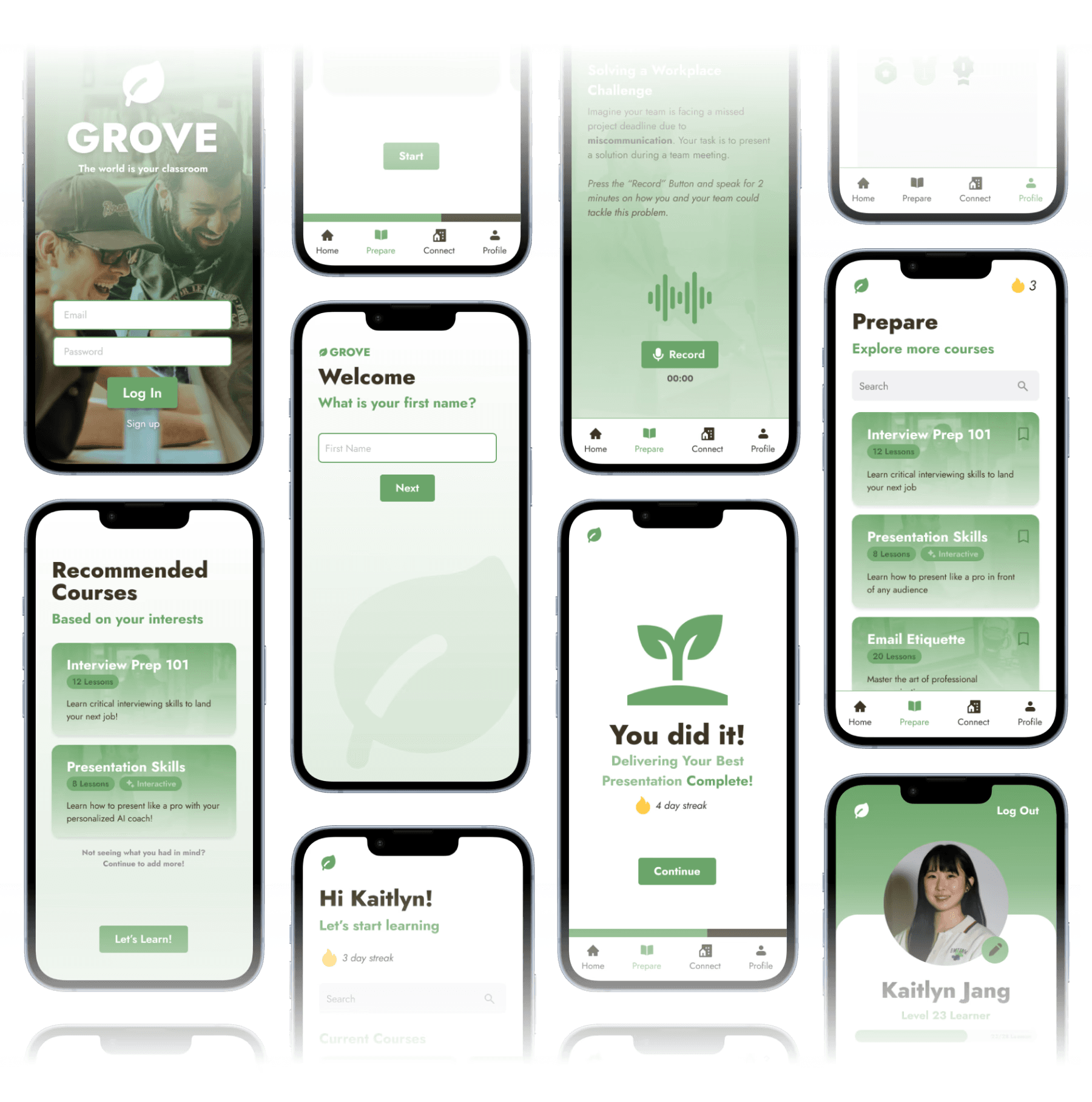
Grove is an educational mobile platform that allows bite-sized lessons for busy individuals who are looking for transferable soft skills.
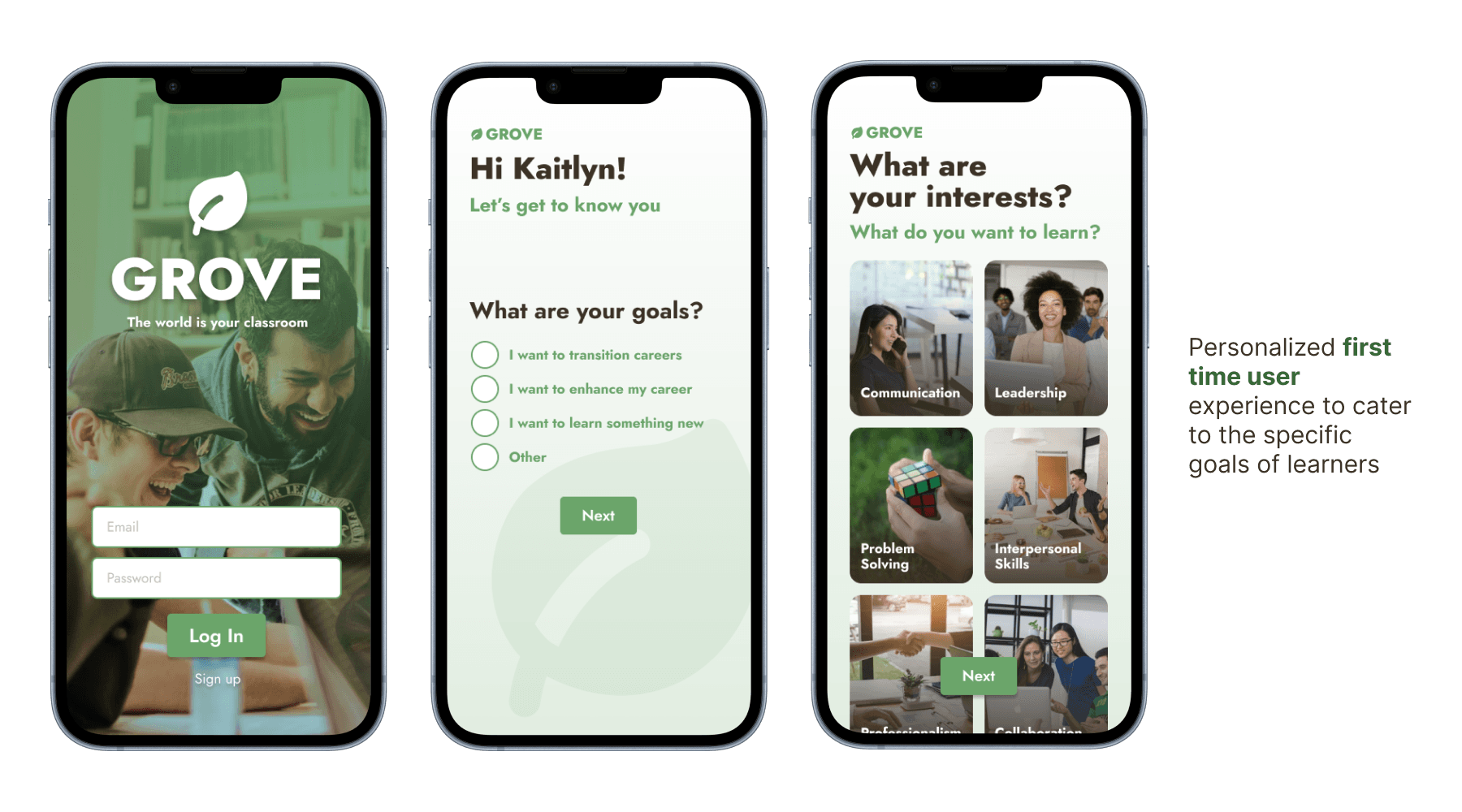
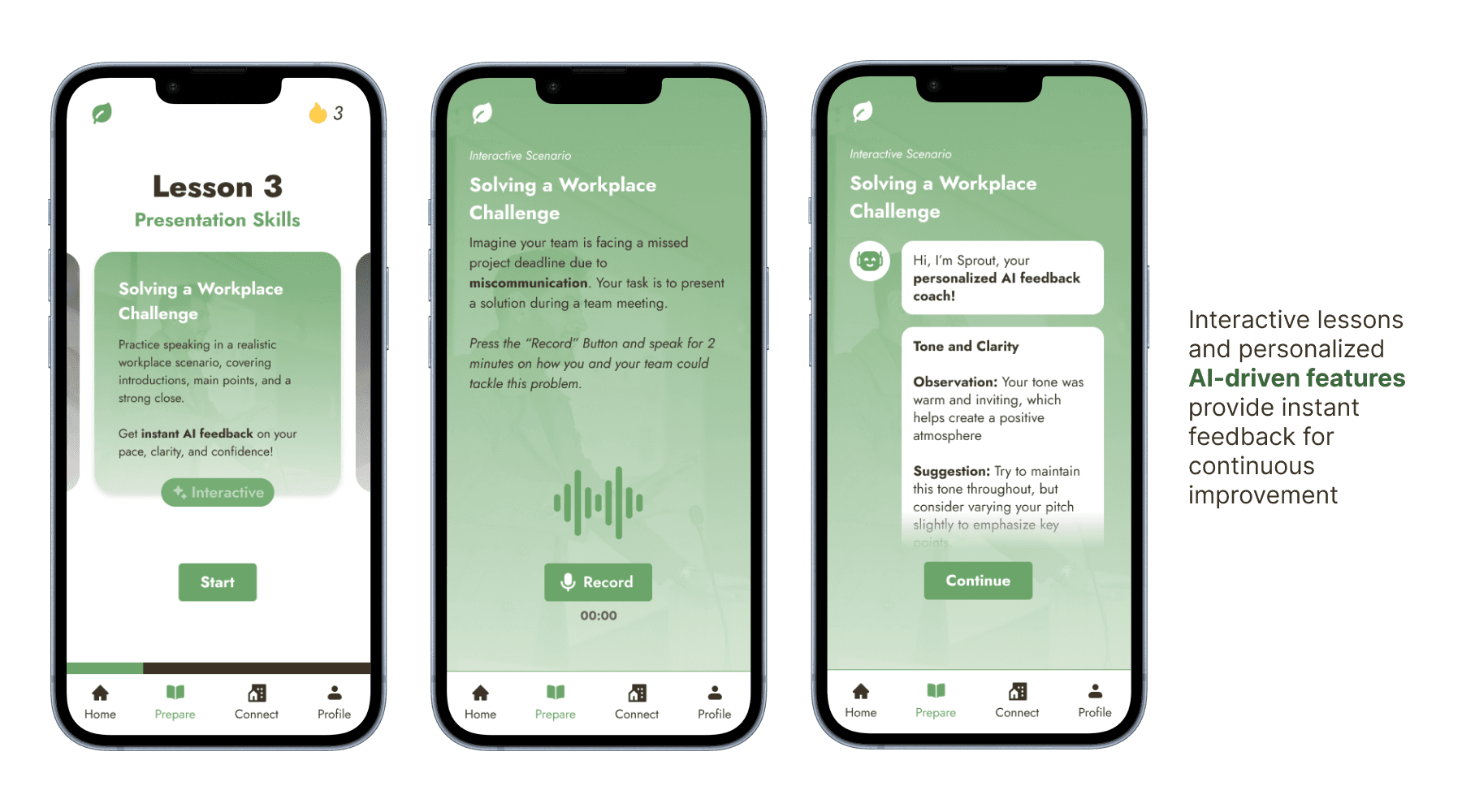
The jewel of our product is really these interactive lessons that re-create a realistic corporate scenario. These are social scenarios such as interacting with your colleagues, presenting, interviewing, etc
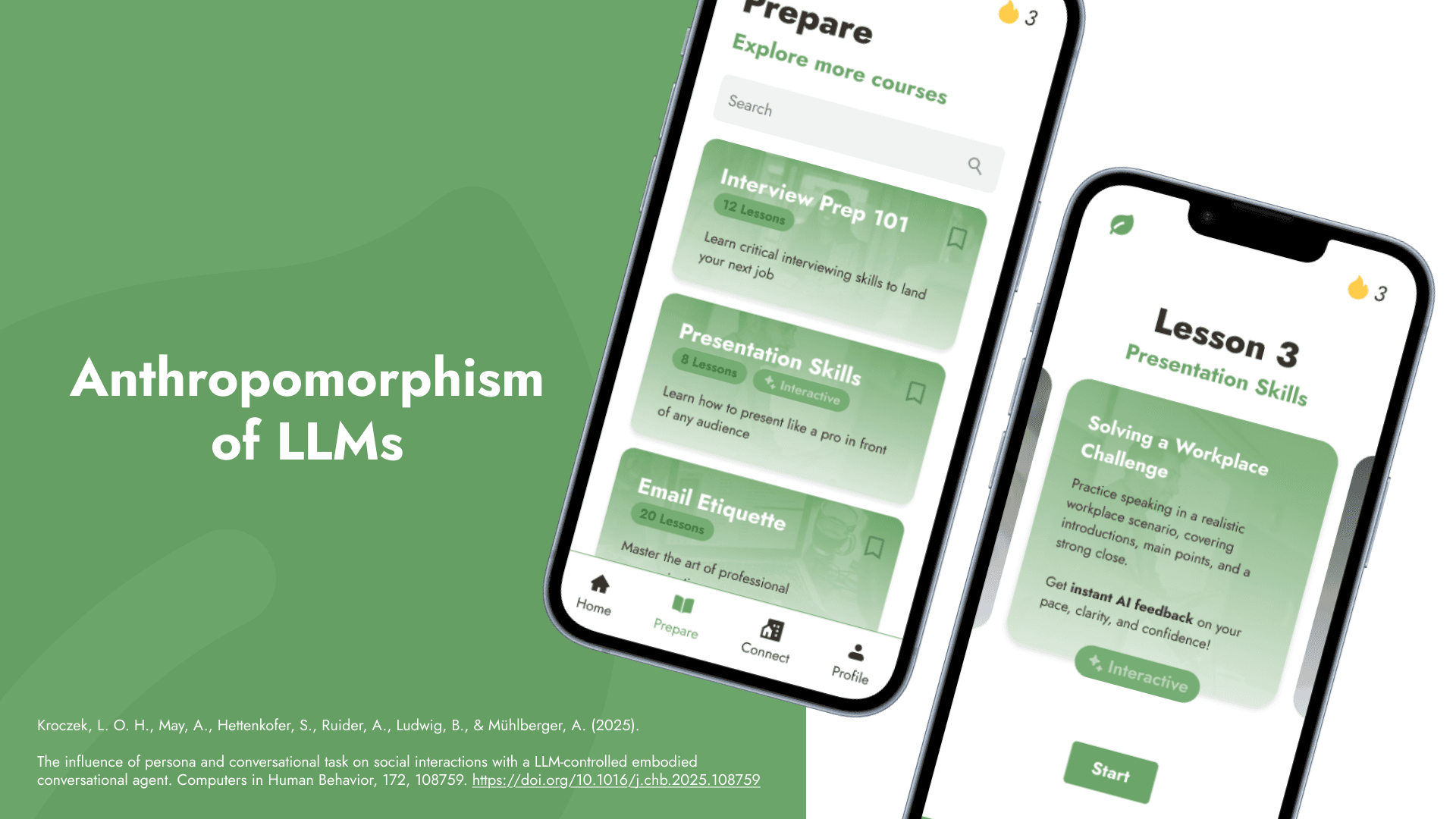
What we found interesting in our secondary research was that users anthropomorphize AI when they're given human-like qualities in their interaction experience (e.g. personality, intonation, the voice chat features in itself) and this factor makes these interactive lessons all the more effective.
Reflection
What I've Learned
This was my first design competition! It was especially interesting working (and conducting primary research) under rigid time constraints. I've learned that it was critical to outline your design priorities from the start to have an effective allocation of your time.
At the same time, you can plan everything at the start and still make many, many unaccounted errors along the way—which is fun in itself! These make the iteration process all the more rewarding, and we were able to create a product that effectively addresses the problem space.
Thanks for reading!